Three Varieties, Three Different Use Cases
Mango pulp is not a uniform ingredient. Alphonso, Kesar and Totapuri are three distinct mango cultivars with different total soluble solids, acidity, colour intensity, fibre perception, aroma profile and processing behaviour — and those differences matter directly in industrial applications such as juice, nectar, dairy, ice cream, bakery and foodservice.
In professional sourcing, the question is not which variety is "best", but which variety fits the target formulation, product economics and expected sensory result. A processor making premium mango gelato, a beverage company producing nectar under a defined fruit-content standard, and a foodservice manufacturer looking for stable mango flavour at controlled cost will typically need different cultivars.
APEDA identifies Alphonso, Kesar and Totapuri among the main commercial processing varieties exported from India, and notes that India exported more than 63,000 MT of mango pulp in FY 2024–25 — which reflects the industrial scale and international relevance of these cultivars in trade food manufacturing. FSSAI standards for fruit and vegetable products provide the regulatory framework for soluble solids, acidity and permitted additives in commercial mango pulp intended for export and domestic sale.
This guide is designed for importers, beverage manufacturers, distributors and industrial buyers who need to choose the right mango cultivar based on use case and measurable parameters — not on marketing language alone.
Side-by-Side Comparison
| Parameter | Alphonso | Kesar | Totapuri |
|---|---|---|---|
| Main origin | Ratnagiri / Devgad / Konkan belt, Maharashtra | Gir / Junagadh / Amreli, Gujarat | Andhra Pradesh, Karnataka, Tamil Nadu |
| Processing season | April – June | May – July | May – August |
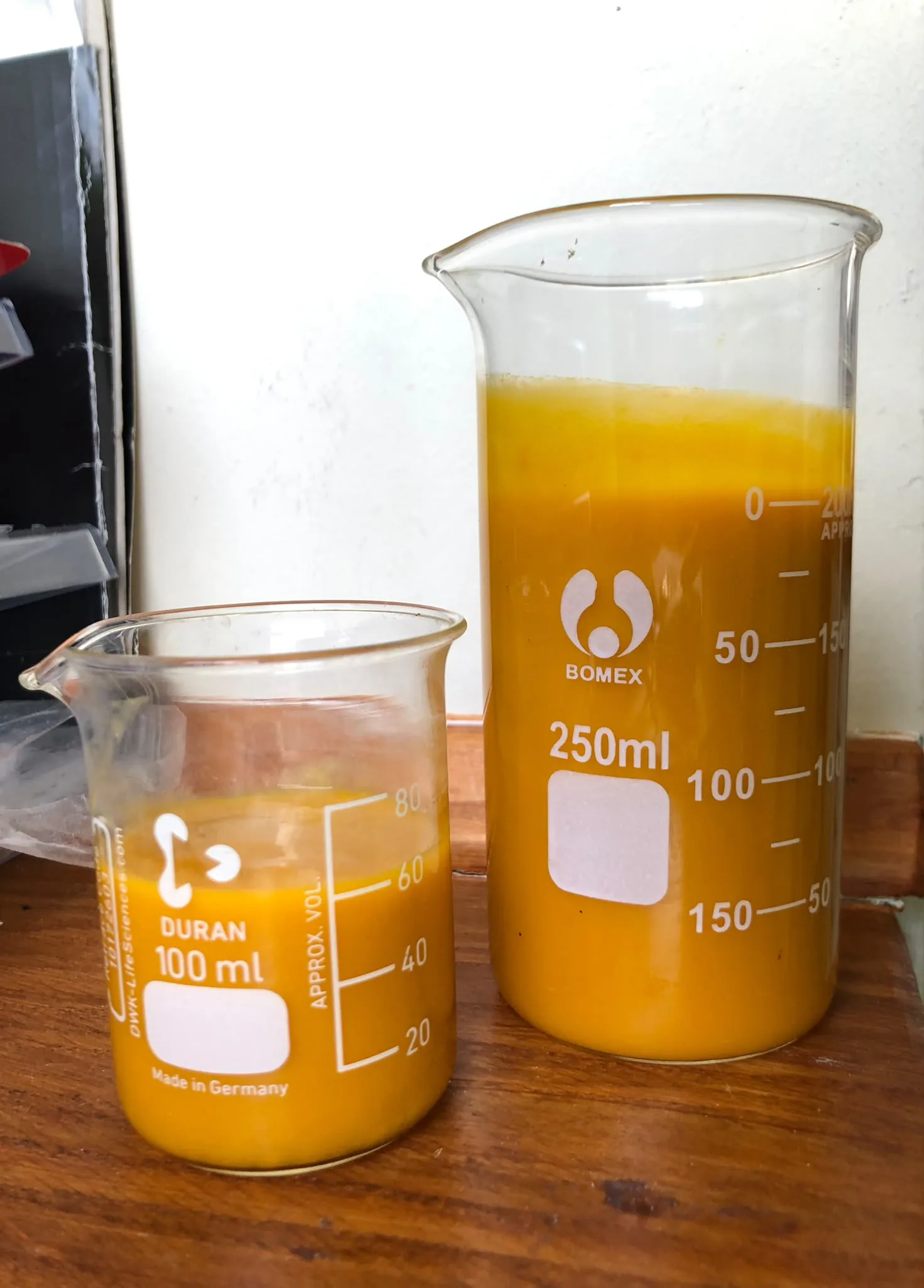
| Colour | Deep orange, high carotenoid intensity | Medium orange, lighter than Alphonso | Yellow to yellow-orange, less rich visually |
| Brix (°Bx) | Min. 16°Bx (export-grade reference) | Batch-dependent — verify per COA | Typically lower than Alphonso; verify per COA |
| Titratable acidity | ~0.45–0.90% (as citric acid) | Batch-dependent | Higher — tangier, brighter flavour profile |
| Aroma intensity | Strong — high flavour impact | Moderate — clean and balanced | Mild to medium — less dessert-style |
| Fibre / texture | Low fibre, smooth mouthfeel | Low fibre, smooth | More fibrous, denser — functional for processing |
| Shelf life (aseptic drum) | 24 months ambient | 24 months ambient | 24 months ambient |
| Price tier | Premium | Mid-range | Economy / industrial |
| Best application | Ice cream, gelato, sorbet, premium beverages, desserts | HoReCa, dairy drinks, standard production, foodservice | Juice, nectar, fruit drinks, industrial blends |
For technical buyers, this table should function as a formulation tool rather than a cosmetic variety comparison. In practice: Alphonso is purchased for flavour identity, Kesar for balanced production performance, and Totapuri for industrial efficiency, acidity and blending flexibility.
Alphonso Mango Pulp
Alphonso is one of the most recognised Indian mango cultivars in international pulp trade and is widely treated as the premium benchmark for mango flavour. APEDA lists Alphonso among India's major commercial pulp export varieties, and processing literature consistently describes it as a cultivar with strong varietal aroma, rich sweetness, low perceived fibre and visually attractive deep orange pulp.
The variety is grown mainly in Maharashtra — specifically in Ratnagiri, Devgad and the broader Konkan belt. Its processing season typically runs from April to June, which defines the annual production window and strongly influences crop-year pricing and availability.
From a technical standpoint, export-grade Alphonso pulp is commonly specified at a minimum of 16°Bx in trade practice — consistent with how the premium Alphonso category is positioned commercially. Titratable acidity is typically in the range of 0.45–0.90% expressed as citric acid, giving a Brix/acid ratio well suited to dessert applications where balanced sweetness and low perceived sourness matter. Carotenoid levels in Alphonso are reported as relatively high compared with more industrial cultivars, which explains why deep colour and aromatic intensity carry well into finished applications after processing.
In formulation terms, Alphonso is best suited for applications where mango must remain the dominant sensory note even after dilution, freezing, aeration or blending with dairy solids. For cost-sensitive industrial use where the pulp is heavily diluted or blended with multiple strong flavours, the premium paid for Alphonso may not translate into proportional sensory value — and Kesar or a blended system is usually more appropriate.
Alphonso — key sourcing facts
Season: April to June (India)
Processing regions: Ratnagiri, Devgad, Konkan coast, Maharashtra
Brix reference: Minimum 16°Bx (export-grade); verify per lot COA
Acidity: ~0.45–0.90% as citric acid
Shelf life (aseptic drum): 24 months at ambient temperature
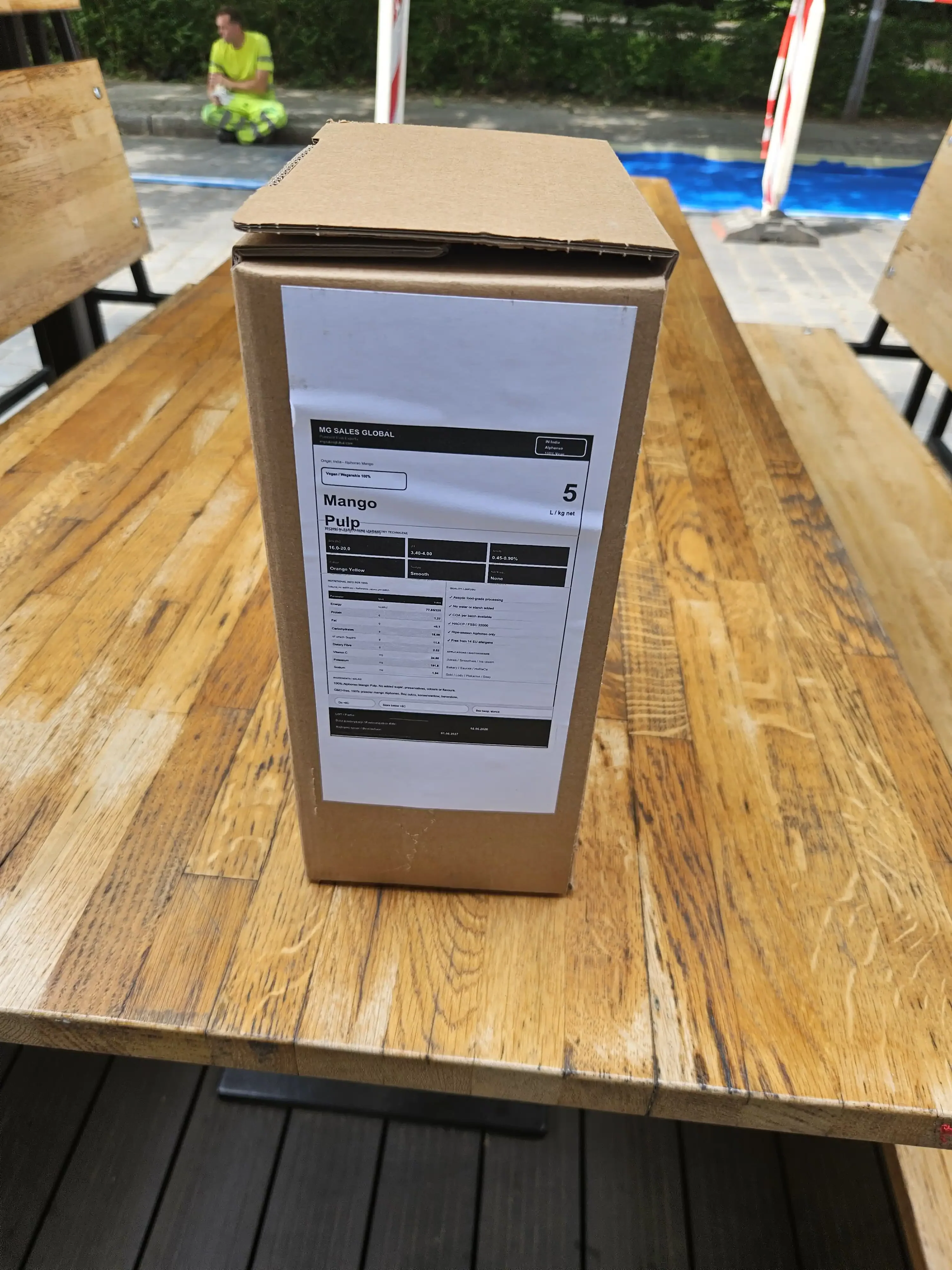
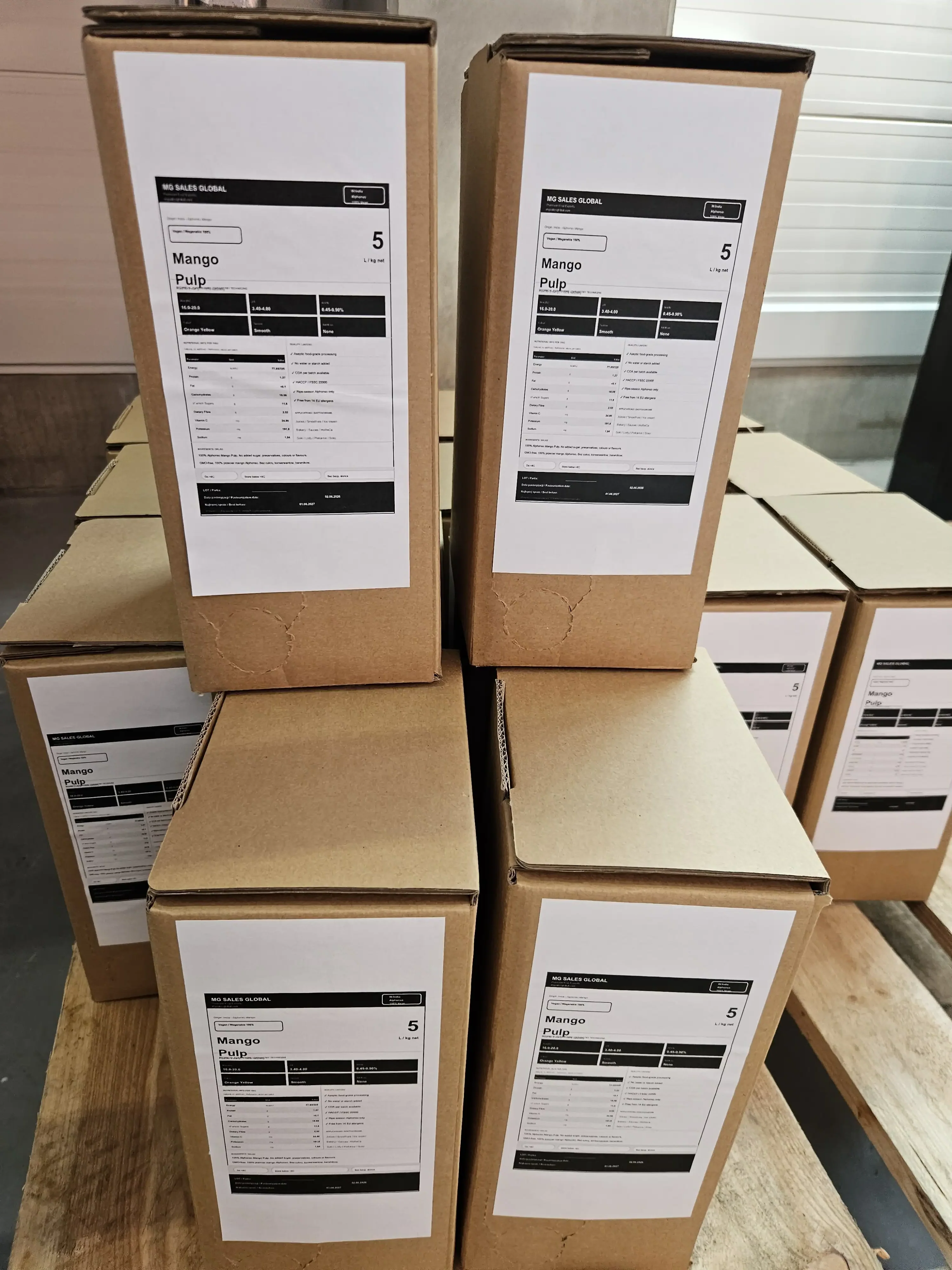
Packaging from MG SALES: 3.1 kg / 20 kg / 210 kg aseptic drums
Best for: Ice cream, gelato, sorbet, premium smoothies, premium beverages, dessert systems, branded SKUs
Kesar Mango Pulp
Kesar occupies the middle position between premium dessert mangoes and high-volume industrial cultivars. It is widely regarded as a high-quality processing variety with balanced sweetness, attractive but lighter colour than Alphonso, smooth texture and a commercially useful flavour profile that is clearly mango-forward without requiring the cost of Alphonso.
Kesar is grown mainly in Gujarat — especially in the Gir and Junagadh belt, with related supply from Amreli and nearby districts. The season typically runs from May to July, which makes it useful for processing calendars after the early Alphonso window closes and provides supply continuity through mid-season.
A key technical point for buyers: Kesar is more batch-dependent than Alphonso in terms of soluble solids and colour intensity. This means that sourcing decisions should be based on lot-specific COA data rather than on broad varietal assumptions. Two Kesar lots from different processors or different crop years may differ meaningfully in Brix, acidity, colour and flavour expression — which is why industrial buyers formulate against actual analytical data, not against cultivar mythology.
Compared with Alphonso, Kesar is usually lighter in colour, milder and more balanced in aroma, and more commercially flexible in cost-sensitive product development. Compared with Totapuri, it is richer in flavour, less acidic and more suited to dessert-style applications.
Kesar — key sourcing facts
Season: May to July (India)
Processing regions: Gir, Junagadh, Amreli, Gujarat
Brix: Batch-dependent — always verify lot-specific COA
Sensory profile: Sweet, clean, balanced; less intense than Alphonso; low fibre
Shelf life (aseptic drum): 24 months at ambient temperature
Packaging from MG SALES: 3.1 kg / 20 kg / 210 kg aseptic drums
Best for: HoReCa, standard dairy production, foodservice, smoothies, lassi, balanced commercial applications
Totapuri Mango Pulp
Totapuri is the classic industrial processing cultivar in the Indian mango sector. APEDA lists Totapuri among the main mango pulp varieties exported from India, and processor-facing industry material consistently describes it as the workhorse variety for juice, nectar and bulk processing — valued for its tangy profile, broader seasonal availability and competitive economics.
It is grown mainly in southern India — Andhra Pradesh, Karnataka and Tamil Nadu — with a season that typically runs from May to August, giving it the longest processing window of the three main cultivars.
Technically, Totapuri is characterised by lower Brix than premium dessert cultivars in many commercial lots, higher acidity that gives a brighter and tangier flavour, more functional body and often more perceived fibre than smooth dessert pulps. That higher acidity is not a weakness — in many beverage and nectar applications it is a commercial advantage, because it delivers a more vivid mango note and can reduce the need for flavour correction in acidified drink systems.
Processing literature indicates that Totapuri shows good viscosity and consistency characteristics in processed applications, making it well suited to blending and standardisation in industrial beverage production. Many processors use Totapuri as the base and improve overall flavour and colour by adding a smaller proportion of Alphonso or Kesar — a common approach in nectars, fruit drinks and multi-component beverage systems.
Totapuri — key sourcing facts
Season: May to August (India)
Processing regions: Andhra Pradesh, Karnataka, Tamil Nadu
Brix: Typically lower than Alphonso — verify by lot-specific COA
Acidity: Higher than Alphonso and Kesar — tangier, more functional for beverage systems
Shelf life (aseptic drum): 24 months at ambient temperature
Packaging from MG SALES: 20 kg / 210 kg aseptic drums
Best for: Juice bases, nectars, fruit drinks, industrial blends, high-volume cost-sensitive production
Processing and Application Guide
For industrial buyers, choosing mango pulp is not only about taste — it is about how the raw material behaves in the final product system. The same cultivar can perform differently in a nectar, yogurt, gelato, bakery filling or ambient sauce, because sweetness, acidity, fibre, viscosity and volatile aroma interact differently with sugar, milk solids, stabilisers, pectin systems and thermal treatment.
Premium ice cream, gelato and sorbet
Alphonso is the strongest technical choice. Its flavour impact and colour remain perceptible even after blending with sugar, dairy solids and air incorporation. Kesar is a good alternative for standard frozen dessert lines where cost control matters more than maximum flavour intensity.
Mango juice and nectar
Totapuri dominates industrial juice and nectar production because of its tangy profile, competitive cost and good functional characteristics at scale. FSSAI standards for mango nectar and fruit beverages specify minimum fruit content and soluble solids requirements — Totapuri's acidity profile suits these formulations well. For premium single-variety nectar, Alphonso or Kesar are more appropriate.
Mango lassi and dairy beverages
Both Alphonso and Kesar perform well in lassi and dairy-based beverages. Alphonso delivers the strongest mango flavour and colour; Kesar is a commercially efficient alternative for standard HoReCa and foodservice production. Totapuri is less commonly used in lassi due to its higher acidity and less dessert-like profile, though it can appear in cost-sensitive blended versions.
Bakery fillings and dessert sauces
Alphonso is preferred for premium pastry and dessert fillings where mango identity must survive baking or thermal processing. Kesar is suitable for standard bakery applications. Totapuri's higher acidity and fibre content make it less suited to high-end dessert fillings but functional in industrial sauce and compound applications.
Industrial blending
Blending Totapuri with a smaller proportion of Alphonso or Kesar is a common practice in industrial production. Processing literature supports the logic — the richer cultivar improves sensory acceptability while the Totapuri base controls raw-material cost. Typical ratios depend on the finished product specification and are determined by the buyer's formulation team against COA data.
Which Variety Should You Buy?
The right cultivar depends on what you manufacture, how much of the pulp survives into the final product, and whether the consumer is paying for a premium mango experience or simply for a mango-flavoured product.
Premium ice cream, gelato, sorbet, premium smoothies, high-end desserts: Alphonso — strongest flavour identity, deepest colour, highest aroma impact.
Standard HoReCa, dairy drinks, milkshakes, balanced mango formulations: Kesar — best compromise between quality, consistency and raw-material cost.
Juice blends, nectars, fruit drinks, industrial compounds, high-volume processing: Totapuri — most economical and functionally appropriate for acidified, diluted or blended systems.
The best first question is not "which is the best mango pulp?" but "which cultivar gives the right Brix, acidity, flavour intensity and cost structure for my product category?" That is how professional procurement teams evaluate mango pulp.
How MG SALES Sources Mango Pulp
MG SALES sources mango pulp exclusively from India and focuses on varieties with clear industrial use cases rather than generic mixed-origin pulp. We work with Indian processors and evaluate lots against practical trade parameters — Brix, acidity, colour, aroma, application fit and documentation quality — before confirming a shipment.
Our approach is application-led. We do not recommend Alphonso to a buyer who only needs a base for a diluted nectar, and we do not recommend Totapuri to a brand building a premium dessert SKU around a strong mango flavour claim. Matching cultivar to use case is more important than pushing the highest-priced option.
Each commercial lot is supported by a Certificate of Analysis and a technical data sheet. For industrial buyers, the COA is not a formality — it is the document that confirms whether the batch actually matches the formulation target in terms of Brix, acidity, colour and product consistency. We can also support sample evaluation in smaller packs before a larger order, which is the most practical way for R&D and procurement teams to compare cultivars inside their own product system.
Frequently Asked Questions
What is the main technical difference between Alphonso and Kesar mango pulp?
The main difference is flavour intensity, colour depth and commercial positioning. Alphonso delivers stronger varietal aroma, deeper orange colour and a more premium flavour impact suited to ice cream, gelato and premium beverages. Kesar is milder, balanced and commercially more flexible for standard dairy, HoReCa and foodservice production. Alphonso is purchased for flavour identity; Kesar is purchased for balanced production performance at lower raw-material cost.
What Brix does Alphonso mango pulp have?
Premium export-grade Alphonso mango pulp is commonly specified at a minimum of 16°Bx in trade practice, consistent with APEDA commercial classifications. Actual lot values should always be verified on the batch COA, because crop-year variation affects soluble solids. Kesar and Totapuri are more batch-dependent and should always be evaluated by lot-specific COA data.
Which mango pulp variety is best for ice cream and gelato?
For premium ice cream, gelato and sorbet, Alphonso is the strongest technical choice. Its flavour impact, rich orange colour and strong varietal aroma remain perceptible even after blending with sugar, dairy solids and air incorporation. Kesar is a good alternative for standard dairy lines where cost control matters more than maximum flavour intensity. Totapuri is generally not recommended for premium frozen desserts due to its lower flavour richness and higher acidity.
Why is Totapuri mango pulp used so widely in juice and nectar production?
Totapuri combines competitive cost, broad seasonal availability across Andhra Pradesh, Karnataka and Tamil Nadu, higher acidity that gives a vivid mango note in beverage systems, and good functional characteristics in large-scale processing. APEDA lists Totapuri among India's major commercial pulp export varieties. It is especially suited to juice bases, nectars, fruit drinks and blended beverage systems where mango is one component rather than a premium mono-varietal claim.
What should a mango pulp COA include?
A complete COA for export-grade aseptic mango pulp should include: variety name, Brix (°Bx), titratable acidity (% as citric acid), pH, colour description, fibre content, Total Plate Count (TPC in CFU/g), yeast and mould count, coliform absence, pathogen absence (Salmonella, E. coli), net weight, lot number, production date, best-before date, and storage conditions. For aseptic drums (210–215 kg), shelf life at ambient temperature should be stated — typically 24 months from production date.
Can Totapuri be blended with Alphonso or Kesar?
Yes — blending is a common industrial practice. Many processors use Totapuri as a cost-efficient base and improve flavour and colour by adding a smaller proportion of Alphonso or Kesar. Processing literature supports this approach: the richer cultivar improves sensory acceptability while the Totapuri base controls raw-material cost. This is common in nectars, fruit drinks and multi-component beverage systems.
What is the acidity of Alphonso mango pulp?
Commercial Alphonso mango pulp is typically specified with titratable acidity of approximately 0.45–0.90% expressed as citric acid, depending on crop year, harvest maturity and processor. Combined with Brix above 16°Bx, this gives a Brix/acid ratio well suited to dessert and premium beverage applications. Totapuri shows higher acidity and a tangier profile better suited to juice and nectar systems.
What is the shelf life of mango pulp in aseptic drums?
Export-grade aseptic mango pulp in 210–215 kg drums typically has a shelf life of 24 months from the date of production when stored at ambient temperature in properly sealed, undamaged drums. This applies to Alphonso, Kesar and Totapuri when processed under correct aseptic conditions. Always verify shelf life and storage conditions on the batch COA supplied by the processor.
Which mango pulp variety is best for mango lassi?
Alphonso delivers the strongest mango flavour and colour in lassi, making it the preferred choice for premium or restaurant-quality products. Kesar is a commercially efficient alternative for standard HoReCa and foodservice lassi production where cost control matters. Totapuri is less commonly used in lassi due to its higher acidity and less dessert-like profile, though it can appear in cost-sensitive blended versions.
Where does Alphonso mango pulp come from?
Alphonso mango pulp is sourced from Maharashtra, India — primarily from Ratnagiri, Devgad and the Konkan belt, the recognised geographic origin for premium Alphonso fruit. Processing season runs April to June. Kesar originates from the Gir and Junagadh belt in Gujarat (season May–July). Totapuri is grown across Andhra Pradesh, Karnataka and Tamil Nadu (season May–August).
Related Pages
- Mango pulp supplier Europe – Alphonso, Kesar, Totapuri from stock in Poland
- Brix and acidity in mango pulp – what it means for importers and buyers
- Mango pulp shelf life and storage conditions
- Aseptic drum vs bag-in-box – which format to choose
- Sourcing mango pulp – what to check before buying
- Contact MG SALES – request a sample or quotation
Frequently Asked Questions — Alphonso vs Kesar vs Totapuri
What is the difference between Alphonso, Kesar and Totapuri mango pulp for ice cream and dairy applications?
| Parameter | Alphonso | Kesar | Totapuri |
|---|---|---|---|
| Brix (min) | 16 °Bx | 16 °Bx | 14 °Bx |
| Brix/acid ratio | 18–32 | 18–30 | 20–35 |
| Viscosity (Bostwick) | 8–12 cm/30s | 5–8 cm/30s (thicker) | 9–15 cm/30s |
| Colour | Deep orange-yellow | Bright deep orange (Hunter b ~30) | Golden yellow (Hunter b ~28) |
| Flavour | Rich, creamy, sweet | Honey-sweet, saffron note | Tart, mild, dry |
| Best for | Premium gelato, ice cream, infant food, fillings | Premium dairy desserts, lassi, yoghurt | Beverage blends, confectionery, industrial nectar |
| Price tier | Highest | Mid-high | Lowest |
Which mango pulp variety has the highest Brix and why does it matter for juice and nectar production?
Alphonso and Kesar both have a minimum Brix of 16 °Bx. Totapuri has a minimum of 14 °Bx. Higher Brix means more natural sugars per unit volume — relevant for nectar production because the EU Fruit Juice Directive (2012/12/EU) requires minimum 13.5 °Bx for reconstituted mango juice. Higher Brix pulp requires less volume per batch to reach target sweetness, lowering effective cost per litre of finished product. Buyers typically specify 15–18 °Bx for beverage applications. Alphonso at 16–20 °Bx is most economical per unit of mango flavour in premium nectars.
Is Totapuri mango pulp suitable for industrial juice blending and what is the typical Brix/acid ratio?
Yes. Totapuri is the standard industrial variety for high-volume juice and nectar blending in Europe. Key parameters:
- Brix/acid ratio: 20–35 (higher ratio = less tart than Alphonso)
- Brix: min 14 °Bx — meets EU minimum of 13.5 °Bx for reconstituted mango juice
- Viscosity: 9–15 cm/30s (Bostwick) — easier to pump in automated dosing systems
- Concentrate available at 28 °Bx for maximum cost efficiency in high-volume blending
Stock held in Poland in 210 kg aseptic drums. COA available per batch.
What is the colour difference between Alphonso, Kesar and Totapuri and how is it measured?
| Variety | Colour description | Hunter b value | Best application for colour |
|---|---|---|---|
| Kesar | Bright deep orange | ~30 (highest) | Yoghurt, desserts, premium juice — strongest visual impact |
| Alphonso | Deep orange-yellow | 25–30 | Premium nectars, gelato — natural rich orange |
| Totapuri | Golden yellow | ~28 | Products where flavour matters more than colour intensity |
All colour values confirmed per COA on request. Hunter Lab colour scale is standard for mango pulp specification in trade contracts.
Can I order a mixed pallet of Alphonso and Totapuri mango pulp from European stock?
Yes. MG SALES holds Alphonso, Kesar and Totapuri in stock in Wrocław, Poland. Mixed pallets combining different varieties are available on request.
- MOQ: typically 1 pallet per product line (approx. 880–1,320 kg for 210 kg drums)
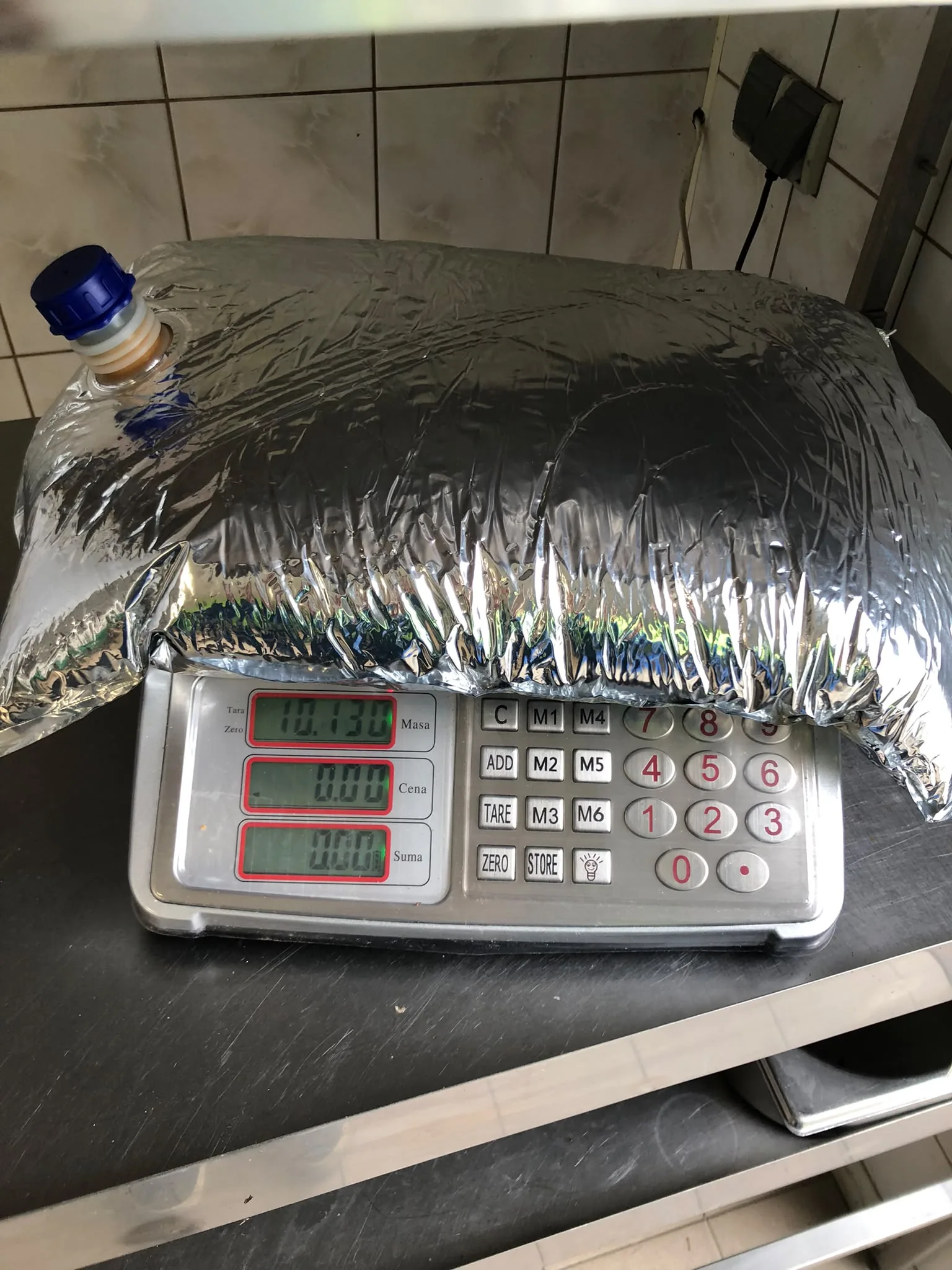
- Formats: 20 kg bag-in-box (all varieties), 210 kg aseptic drum (Alphonso and Totapuri)
- Delivery to EU: 1–5 business days by truck
- Documents: COA, HACCP certificate, Halal certificate, phytosanitary certificate on request
What are the shelf life and storage conditions for aseptic mango pulp?
| Format | Shelf life (sealed) | Storage condition |
|---|---|---|
| 210 kg aseptic drum | 18–24 months | Ambient 15–25°C, away from direct sunlight |
| 20 kg bag-in-box | 18 months | Ambient, dry warehouse |
| 25 kg frozen block | 12 months | –18°C continuous cold chain |
Once opened: refrigerate at 2–5°C, consume within 3–5 days. Stock in Poland rotated on FIFO basis — remaining shelf life confirmed at point of order.
Which mango pulp variety should I choose for mango lassi and dairy beverage production?
For mango lassi: Alphonso is the traditional choice — rich creamy flavour integrates well with dairy and yoghurt base. Kesar is preferred for premium lassi products where deeper colour (Hunter b ~30) and distinctive saffron note are part of the product identity. Totapuri is not typically used in lassi due to its tart flavour profile.
For mango-flavoured yoghurt: Kesar gives the strongest visual impact. For budget dairy blends: Totapuri at lower cost per kg with Brix/acid ratio 20–35 gives acceptable mango character. Sample sets of all three varieties available on request from Poland stock.
What microbiological standards apply to aseptic mango pulp exported from India via Poland?
All three varieties when properly processed meet the same food-grade microbiological standards per FSSAI fruit and vegetable product regulations:
| Parameter | Food-grade standard | Infant food (EU Reg 2016/127) |
|---|---|---|
| TPC | <10,000 CFU/g | <100 CFU/g |
| Salmonella | Absent in 25g | Absent in 25g |
| Yeast & mould | <10 CFU/g | <10 CFU/g |
| E. coli | Absent in 1g | Absent in 1g |
COA with full microbiological panel available per batch on request for all three varieties.