Why Brix and Acidity Matter
When you receive a COA for mango pulp, two numbers appear on every document: Brix and acidity. Most buyers check that the numbers fall within a stated range and move on. But understanding what these numbers actually mean — and how they interact — gives you a real tool for evaluating whether a batch suits your application.
This guide explains both parameters, how to read them together and what to watch for when sourcing mango pulp from India.
What Is Brix?
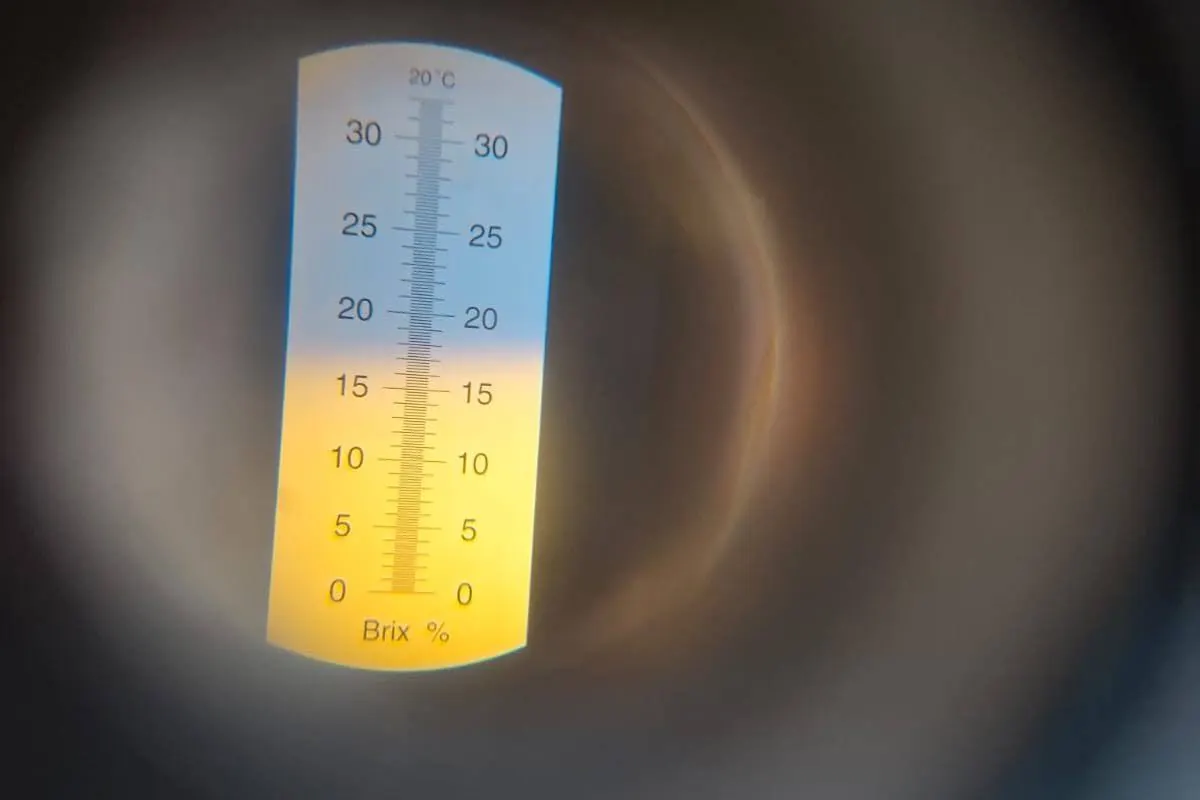
Brix (°Bx) measures the concentration of dissolved solids in a liquid — in practice, it is the best single indicator of natural sugar content in fruit pulp. It is measured with a refractometer, a simple optical device that reads the refraction of light through the liquid.
One degree Brix (1°Bx) equals approximately 1 gram of sucrose per 100 grams of solution. For mango pulp this is not pure sucrose — mangoes contain glucose, fructose and sucrose — but Brix gives a reliable comparative measure across batches and varieties.
Higher Brix means more natural sugar, which translates directly to:
- Sweeter, richer flavor in the finished product
- Stronger mango taste without adding sugar
- Better performance in ice cream and sorbets where sugar content affects texture
- Higher natural preservation potential (sugar inhibits microbial growth)
Brix reference values for mango pulp
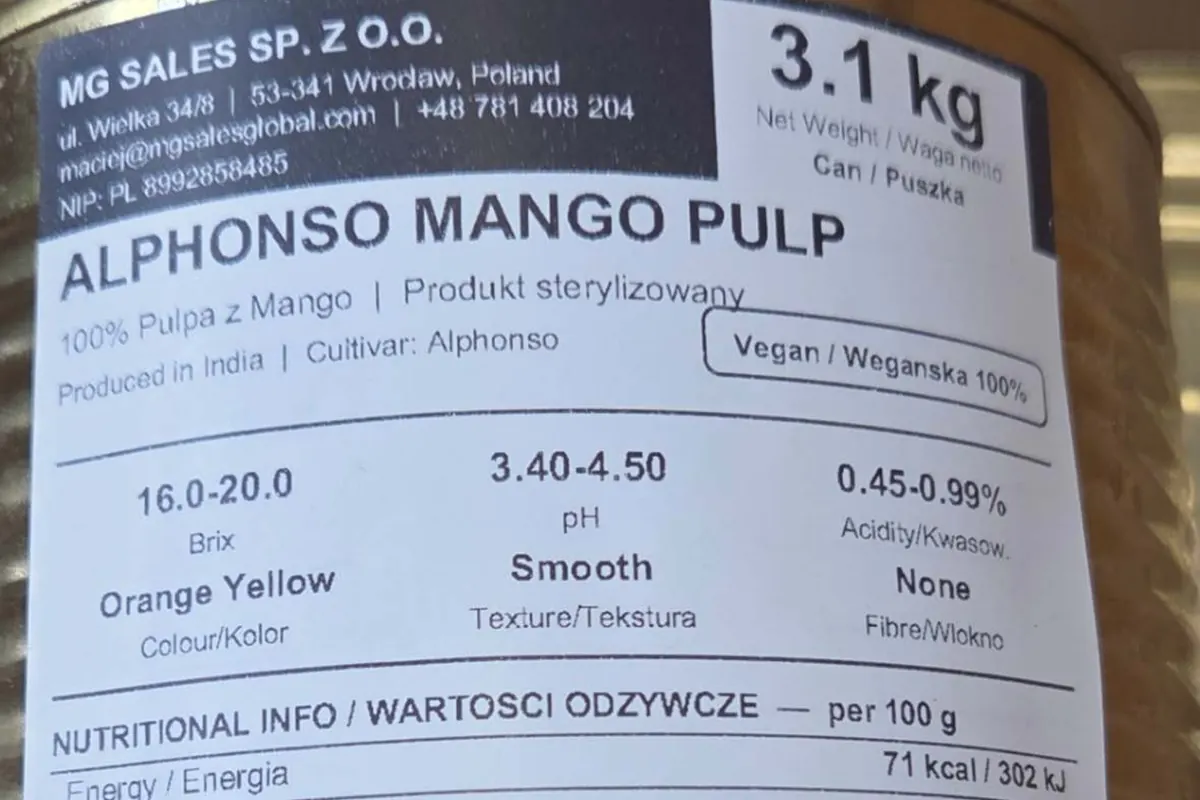
Alphonso: minimum 16°Bx — premium applications
Totapuri: typically lower than Alphonso — industrial blending
Note: Brix varies by harvest season, maturity at processing and orchard. Always request lot-specific COA.
What Is Acidity in Mango Pulp?
Acidity in fruit pulp is measured as titratable acidity — the total concentration of acids present in the pulp, expressed as a percentage. For mango pulp it is typically expressed as citric acid equivalent, even though mangoes contain mainly citric and malic acid.
Acidity determines the tartness and sharpness of the flavor. It is the counterbalance to Brix: a pulp with high Brix and high acidity tastes bright and complex; a pulp with high Brix and low acidity tastes flat and overly sweet.
For Alphonso mango pulp, acidity typically falls between 0.45% and 0.90%. This range is wide enough to produce significantly different flavor profiles across batches from the same variety — which is why lot-specific COAs matter.
The Brix-to-Acid Ratio
The most useful tool for evaluating mango pulp flavor is the Brix-to-acid ratio, also called the sugar-acid ratio. It is calculated by dividing Brix by acidity percentage:
Brix-to-acid ratio = Brix (°Bx) ÷ Acidity (%)
A higher ratio means sweeter and less tart. A lower ratio means more balanced or sharper.
| Example | Brix | Acidity (%) | Ratio | Flavor character |
|---|---|---|---|---|
| Alphonso — sweet batch | 18 | 0.50 | 36 | Very sweet, rich, low tartness |
| Alphonso — balanced batch | 17 | 0.75 | 23 | Sweet with bright acidity, complex |
| Alphonso — sharp batch | 16 | 0.90 | 18 | Tart, intense, less sweet |
| Totapuri — typical | 13 | 1.10 | 12 | Tangy, sharp, fibrous |
For ice cream and premium desserts, a ratio above 25–30 typically produces the best results. For beverage applications, a lower ratio with sharper acidity can be more appealing. For industrial blending, the ratio matters less because the pulp is diluted and adjusted in formulation.
pH vs Acidity — What Is the Difference?
COAs for mango pulp often list both acidity (%) and pH. These are related but measure different things.
Acidity (%) measures the total acid concentration — how much acid is present. pH measures how strongly acidic the solution is on a logarithmic scale from 0 to 14, where 7 is neutral and lower numbers are more acidic.
For Alphonso mango pulp, pH typically falls between 3.50 and 4.00. Lower pH means more acidic, which is important for food safety — products with pH below 4.6 are considered high-acid foods and have different preservation requirements.
In practice: check both. A batch with acceptable acidity (%) but unexpected pH may indicate measurement inconsistency or contamination.
How Brix and Acidity Change Between Seasons
Mango pulp is a natural agricultural product. Brix and acidity are not fixed — they change between harvest seasons, between orchards and even between batches from the same processor in the same year.
Early season fruit tends to have higher acidity and lower Brix. Peak season fruit — typically the main harvest window in May and June for Alphonso — produces pulp with optimal Brix and balanced acidity. Late season fruit can drop in both Brix and flavor intensity.
This is why generic product specifications are not sufficient for serious sourcing. A COA should always be lot-specific, with the production date and batch number clearly stated.
What to request before buying mango pulp
Lot-specific COA — not a generic product sheet
Brix reading — measured on the actual batch, not a specification range
Acidity reading — to calculate the Brix-to-acid ratio for your application
pH — for food safety and formulation planning
Microbiological results — total plate count, yeast and mold
Production date and batch number — to track shelf life from processing
How MG SALES Verifies Brix and Acidity
We do not accept mango pulp batches based on paper alone. Our QC team in India measures Brix and acidity on the actual lot before it is purchased. We compare the measured values against the COA and against our internal standards.
If the measured Brix is below our minimum or the acidity falls outside the acceptable range for the stated variety, we decline the batch. This protects our clients from receiving product that does not match what they ordered.
COA is available per batch for every order. We share it before delivery on request.
Frequently Asked Questions
What is Brix in mango pulp?
Brix (°Bx) measures the sugar content in mango pulp as a percentage of dissolved solids. Higher Brix means sweeter flavor. Alphonso mango pulp should have a minimum of 16°Bx.
What is the ideal Brix for mango pulp?
For premium applications like ice cream, Brix above 16 is preferred. For beverages and industrial use, lower Brix may be acceptable depending on formulation. Always verify Brix from a lot-specific COA.
What does acidity mean in mango pulp?
Acidity is expressed as titratable acidity (citric acid equivalent) as a percentage. It measures the tartness of the pulp. Alphonso typically has 0.45–0.90% acidity. Higher acidity means sharper, more complex flavor.
What is the Brix-to-acid ratio in mango pulp?
The Brix-to-acid ratio is Brix divided by acidity percentage. A higher ratio means sweeter and less tart. Ratios above 25–30 suit premium ice cream; lower ratios suit beverages and industrial blending.
How do I read a mango pulp COA?
Check Brix, acidity, pH, color, microbiological results and production date. Always request a lot-specific COA — not a generic product specification. The batch number must match the shipment you are purchasing.
Frequently Asked Questions – Brix and Acidity in Mango Pulp
What is Brix in mango pulp and what do the numbers mean?
Brix (°Bx) measures the sugar content in mango pulp expressed as a percentage of dissolved solids. Higher Brix means more natural sugar — sweeter flavour and richer taste in finished products. Brix is measured with a refractometer and reported in the COA per batch.
| Variety | Brix (min.) | Typical range | Application |
|---|---|---|---|
| Alphonso | 16 °Bx | 16–22 °Bx | Premium ice cream, nectars, dairy, infant food |
| Totapuri | 14 °Bx | 14–18 °Bx | Industrial blends, beverages, concentrates |
| Totapuri concentrate | 28 °Bx | 28–32 °Bx | High-volume nectar production |
What is the ideal Brix for mango pulp in juice, nectar and dairy production?
The ideal Brix depends on the application and EU regulatory requirements:
- EU Fruit Juice Directive (2012/12/EU): minimum 13.5 °Bx for reconstituted mango juice
- Codex Alimentarius (CODEX STAN 247-2005): minimum 14 °Bx
- Premium nectars and ice cream: buyers typically specify 15–18 °Bx
- Industrial blending: Totapuri at 14–16 °Bx or concentrate at 28 °Bx
Higher Brix pulp requires less volume per batch to reach target sweetness, lowering effective cost per litre of finished product. Alphonso at 16–22 °Bx is most economical per unit of mango flavour in premium nectars.
What does acidity mean in mango pulp and how does it affect flavour?
Acidity in mango pulp is expressed as a percentage of titratable acidity, measured as citric acid equivalent. It determines the tartness and sharpness of the flavour.
| Variety | Acidity (as citric acid) | Flavour profile |
|---|---|---|
| Alphonso | 0.45–0.90% | Balanced sweet-tart, rich and complex |
| Totapuri | 0.50–0.90% | Tart, dry — higher acidity per unit Brix |
Higher acidity = sharper, more complex flavour. Lower acidity = sweeter, rounder profile. For dairy applications where acidity balance is critical, Alphonso is preferred over Totapuri.
What is the Brix-to-acid ratio in mango pulp and why does it matter?
The Brix-to-acid ratio (sugar-acid ratio) = Brix ÷ acidity %. A higher ratio means sweeter and less tart flavour profile.
| Variety | Brix/acid ratio | Flavour impact |
|---|---|---|
| Alphonso | 18–32 | Sweet with complexity — preferred for premium products |
| Totapuri | 20–35 | Higher ratio but tarter base — preferred for blending |
Example: Alphonso with Brix 17 and acidity 0.50% → ratio 34 (very sweet profile). Food technologists use this ratio to predict how pulp will behave in finished products and to ensure batch-to-batch consistency.
How do I read a mango pulp COA and what are the red flags?
A COA for mango pulp should include all of the following — matched to the specific batch lot number:
| Parameter | What to check | Red flag |
|---|---|---|
| Brix (°Bx) | Within variety specification | Below minimum (e.g. Alphonso <16 °Bx) |
| Acidity (%) | 0.45–0.90% for Alphonso | Outside FSSAI/APEDA range |
| pH | 3.50–4.00 for Alphonso | Above 4.5 (food safety risk) |
| TPC | <10,000 CFU/g | Above limit without explanation |
| Salmonella | Absent in 25g | Any presence |
| Yeast & mould | <10 CFU/g | Above limit |
| Lot number | Matches the actual shipment | Generic spec sheet — not lot-specific |
| Production date | Present and recent | Missing or undated |
Related Pages