Two Formats, Different Applications
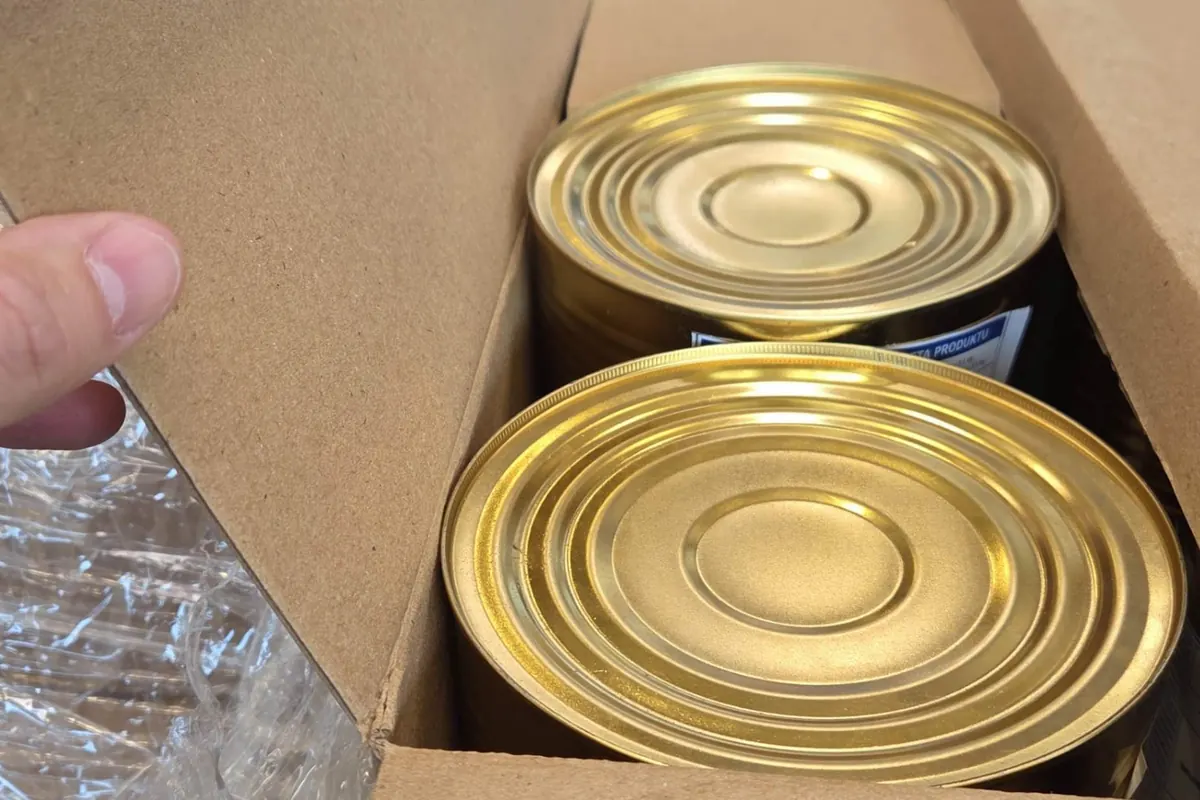
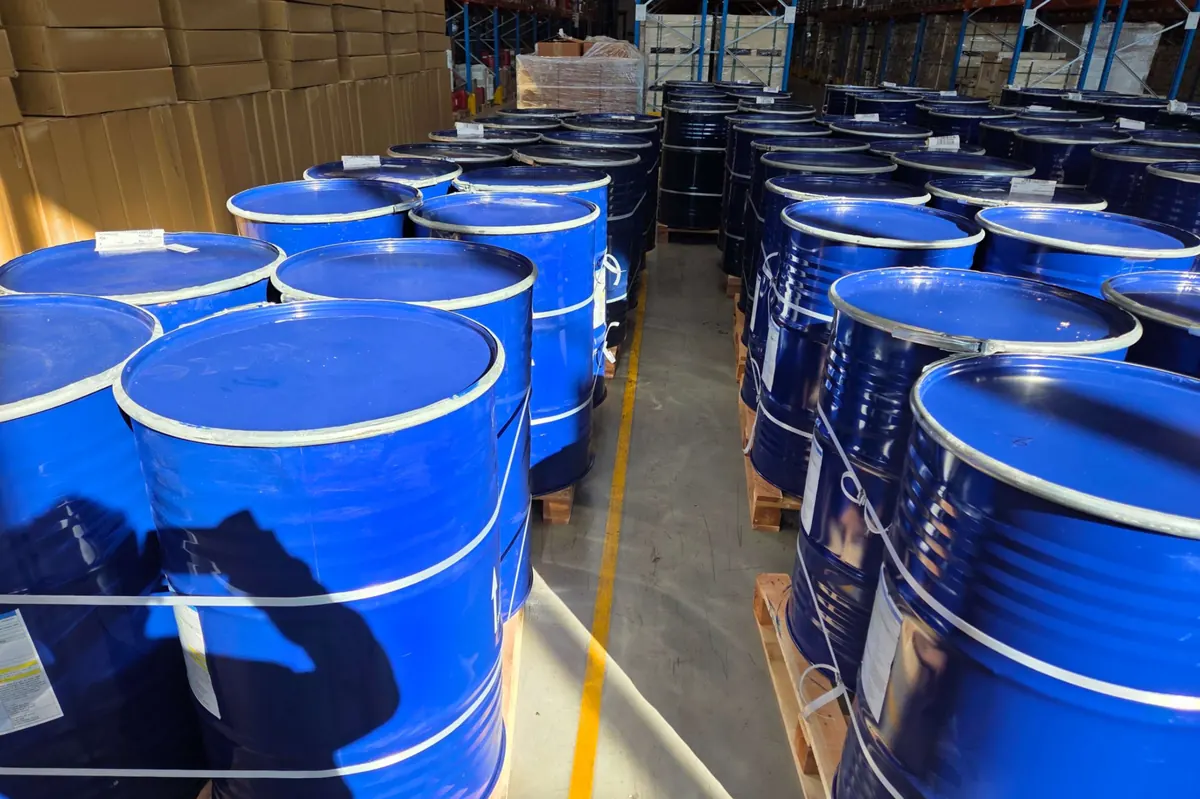
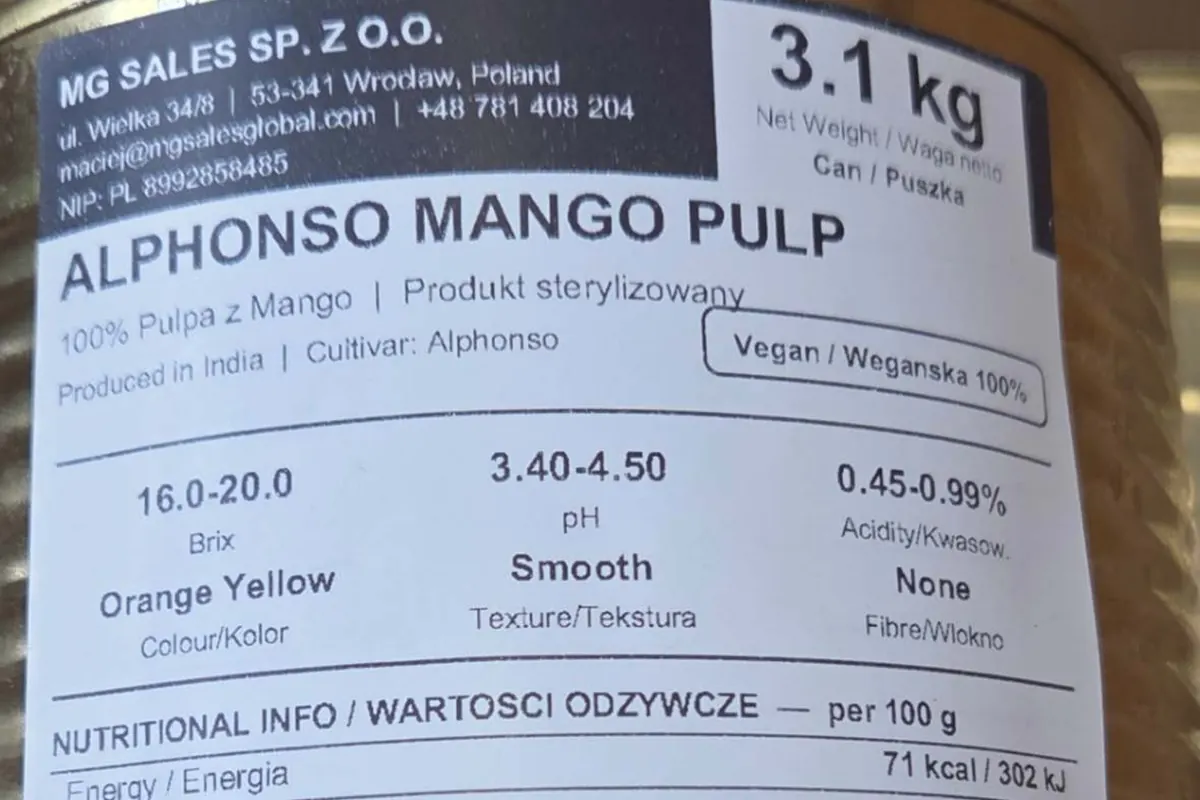
Mango pulp is commercially available in two main aseptic formats: the aseptic drum (200–228 kg) and the 20 kg bag-in-box (and, for Alphonso, the 3.1 kg can). Both use the same aseptic process and deliver the same product quality — the difference is in volume, handling and cost structure.
Choosing the wrong format leads to waste, handling problems or unnecessary cost. This guide explains when each format makes sense.
Side-by-Side Comparison
| Parameter | Aseptic drum (200–228 kg) | Bag-in-box (20 kg) | Can (3.1 kg, Alphonso) |
|---|---|---|---|
| Net weight | 200–228 kg | 20 kg | 3.1 kg |
| Palletisation | ~4 drums / pallet | ~40 bags / pallet | varies |
| Container load (20') | ~80 drums (~17,000 kg) | ~800 bags (~16,000 kg) | smaller volumes |
| Minimum order | 1 pallet (4 drums) | 200 kg | 200 kg |
| Shelf life (sealed) | Up to 24 months | Up to 24 months | Up to 24 months |
| After opening | Use within 3–5 days (refrigerated) | Use within 3–5 days (refrigerated) | Use within 2–3 days |
| Storage (sealed) | Ambient, avoid heat | Ambient, avoid heat | Ambient, avoid heat |
| Handling equipment | Forklift or drum pump required | Manual handling possible | Manual handling |
| Best for | Industrial, large production | HoReCa, small-medium production | Testing, small operations |
| Price per kg | Lower (bulk discount) | Higher | Highest |
Aseptic Drum (200–228 kg) — Industrial Scale
The aseptic drum (200–228 kg) is the standard format for industrial buyers — food manufacturers, juice processors, large-scale ice cream producers and distributors who resell to other businesses.
The drum consists of a steel or high-density plastic outer shell with a multi-layer sterile inner bag. The pulp is filled hot under aseptic conditions, sealed immediately and cooled. The sealed drum can be stored at ambient temperature — no refrigeration needed — for up to 24 months from the production date.
The practical challenge is handling: a full drum weighs over 200 kg and requires a forklift or drum tilter to decant the pulp. Once opened, the remaining product must be transferred to a sealed container and refrigerated, with a shelf life of 3 to 5 days after opening.
Aseptic drum — when it makes sense
Volume: regular consumption above 200 kg per week
Facility: industrial production with loading equipment
Logistics: full pallet or container imports
Cost priority: lowest price per kg is the main driver
Bag-in-Box (20 kg) — The Practical Trade Format
The 20 kg bag-in-box is the most versatile format for importers and buyers who are not at industrial scale. It uses the same aseptic process as the drum — the same shelf life, the same product quality — but in a format that can be handled manually without equipment.
The bag is housed in a cardboard box for structural support during transport and storage. It can be placed directly in a production area, opened with a simple tap or spout, and the remaining product sealed until next use. No pumps, no tilters, no forklifts.
For HoReCa — ice cream shops, cafés, pastry kitchens, restaurant production — 20 kg is usually the right unit size. It matches typical weekly consumption without generating waste from partially used drums that exceed the kitchen's capacity to process.
Bag-in-box 20 kg — when it makes sense
Volume: 20–200 kg per week
Facility: HoReCa, small-to-medium food production, pastry
Logistics: parcel or pallet delivery, no loading equipment needed
Flexibility: ordering smaller quantities more frequently
Can (3.1 kg) — Testing and Small Operations
The 3.1 kg format is designed for product testing, recipe development and very small-scale operations where 20 kg would take too long to consume before quality degrades.
It is also the entry point for new buyers who want to verify the product before committing to a larger order. We recommend starting with 3.1 kg if you have never used the specific variety before — Alphonso from different processors can taste noticeably different, and testing before scaling makes sense.
What Happens After Opening
Once the aseptic seal is broken — whether on a drum or a bag — the product is no longer protected by the aseptic environment. Oxygen exposure begins microbial activity.
After opening, mango pulp should be transferred to a sealed, food-safe container and refrigerated immediately. Shelf life after opening is typically 3 to 5 days at refrigeration temperatures (below 4°C). Do not freeze and re-thaw repeatedly — this degrades texture and flavor.
For production planning purposes: size your orders so that one unit (drum or bag) is consumed within 3 to 5 days of opening. If your production volume does not support this, switch to a smaller format.
Logistics and Storage Before Opening
Both drums and bag-in-box can be stored at ambient temperature as long as the seal is intact. Direct sunlight and high temperatures above 30°C should be avoided — heat accelerates natural degradation even inside sealed aseptic packaging.
MG SALES holds stock in a dry warehouse in Wrocław, Poland. Delivery options include parcel (for smaller bag-in-box orders), pallet and full truck. For drum orders, pallet delivery is standard.
Storage requirements — both formats
Temperature: ambient, ideally below 25°C
Direct sunlight: avoid
Humidity: dry storage recommended for cardboard integrity (bag-in-box)
Sealed shelf life: up to 24 months from production date
After opening: refrigerate immediately, use within 3–5 days
Which Format Should You Order?
- Weekly consumption above 200 kg and industrial facility → aseptic drums. Lower price per kg, efficient logistics.
- Weekly consumption 20–200 kg, HoReCa or small production → 20 kg bag-in-box. Practical handling, no equipment needed.
- First order or recipe testing → 3.1 kg cartons (minimum order 200 kg in total). Verify the product before scaling.
- Importing a full container → drums or bags depending on your downstream distribution. Bags are easier for distributors who resell to small buyers.
Frequently Asked Questions
What is an aseptic drum for mango pulp?
An aseptic drum (200–228 kg) filled with mango pulp under sterile conditions. Sealed shelf life up to 24 months at ambient temperature. Requires forklift or drum pump to handle.
What is bag-in-box packaging for mango pulp?
A smaller aseptic format — 3.1 kg or 20 kg — in a flexible bag inside a cardboard box. Same shelf life as drums. Manual handling possible. Best for HoReCa and small production.
How many bags fit in one pallet of 20 kg mango pulp?
Typically 40 bags per pallet, giving approximately 800 kg net per pallet.
How many aseptic drums fit in one container?
Approximately 80 drums of 210–215 kg per 20-foot container, giving approximately 17,000 kg net.
Which mango pulp format is better for small production?
The 20 kg bag-in-box for regular small production. The 3.1 kg format for testing or very small-scale operations where 20 kg would not be consumed within 3–5 days of opening.
Related Pages