Custom blending — NFC apple juice with tropical fruit pulps
We blend NFC apple juice with tropical fruit pulps in an aseptic facility in Poland. Small series from 1 pallet. Aseptic bag-in-box or glass bottle. Your label or ours.
- NFC apple + mango (Totapuri) — balanced, golden colour
- NFC apple + guava — mild, versatile base
Why mango and guava complement each other
Mango is the anchor flavour — sweet, creamy, widely recognised and commercially proven across European and global markets. Guava is the exotic layer — aromatic, distinctive and capable of lifting a product into a different flavour register without requiring a complete reformulation.
Used alone, guava can be polarising: its aroma is strong enough to dominate a product and may not be universally appealing in all markets. Blended with mango at the right ratio, it becomes a supporting note that adds complexity and a premium tropical character without the risk of guava-forward rejection.
The combination works across applications — ice cream, gelato, sorbet, beverages and smoothies — because both pulps are aseptic, shelf-stable at ambient temperature and available in 20 kg aseptic bag-in-box for easy trial formulation.
Proven ratios for ice cream and gelato
70% mango / 30% white guava – the standard starting point
This is the most commonly used ratio for dairy-based ice cream and gelato. Mango provides the base sweetness and creaminess; white guava contributes an aromatic lift that registers as exotic and premium without overpowering the dairy structure. At 30% white guava, the blend remains visually similar to pure mango (golden-yellow) because white guava flesh is cream-coloured.
| Parameter | Alphonso mango (100%) | 70/30 mango–white guava |
|---|---|---|
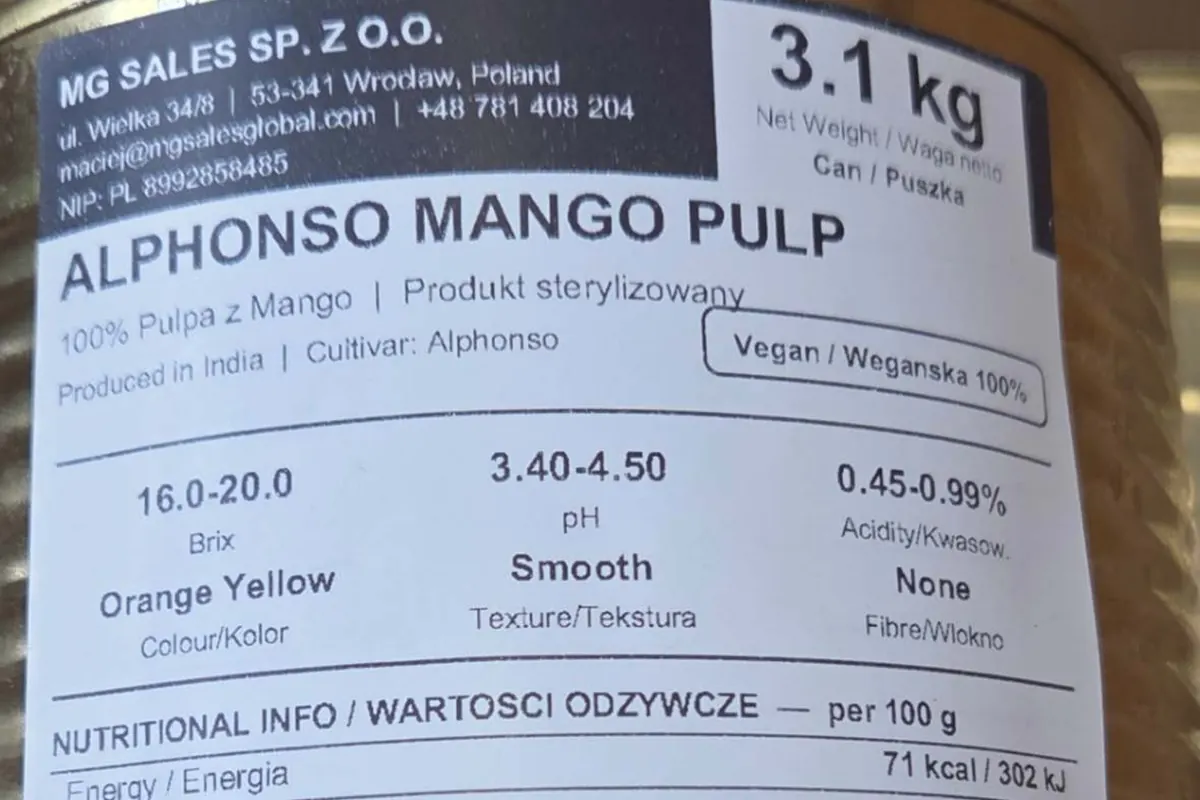
| Brix (approx.) | Min 16°Bx | Approx. 14–15°Bx |
| Colour | Deep golden yellow | Golden yellow (unchanged) |
| Aroma | Classic mango | Mango with exotic aromatic lift |
| Application | Premium mango ice cream | Premium tropical ice cream / gelato |
When to test other ratios
60% mango / 40% white guava — more guava-forward profile. Guava aroma becomes clearly dominant. Suitable for products specifically positioned as mango–guava rather than mango with a guava note. Requires consumer testing in your target market.
80% mango / 20% white guava — classic mango with a subtle exotic note. Good starting point for markets where guava is less familiar and the goal is to add complexity without introducing a new flavour. Lower risk for mainstream positioning.
The impact of the ratio on Brix is linear: each 10% increase in white guava (Brix min 9°Bx) reduces the blend Brix by approximately 0.7°Bx compared to pure Alphonso mango. This needs to be factored into sugar additions when targeting a specific finished product Brix.
Mango–guava in sorbets and frozen drinks
In sorbet and water-based frozen formats, the guava fraction can be higher than in dairy ice cream. The dilution effect of water and the absence of dairy fat means guava aroma compounds are less amplified. A 50% mango / 50% guava sorbet delivers a balanced tropical profile that works well in both artisan and retail formats.
For frozen drinks and granita, pink guava can replace white guava when a visible colour impact is desired. The stronger aroma of pink guava is better suited to these formats where the product is consumed quickly and the tropical intensity is part of the appeal.
Adding a small amount of passion fruit pulp or lemon juice (2–5%) to a mango–guava sorbet base increases perceived freshness and prevents the profile from reading as too sweet — a common issue when both mango and guava Brix are high.
Mango–guava blends for beverages and smoothies
Light beverages and NFC blends
In beverages with high water dilution, a 50/50 mango–guava base (before dilution) is a practical starting point. The dilution reduces Brix and aroma intensity, so starting with a more guava-forward base than you would use for ice cream makes sense. Target final Brix in the drink: 10–13°Bx for a juice-style product.
Smoothies and functional drinks
For smoothies, banana puree or papaya pulp is often added to the mango–guava base to increase body and reduce the need for thickeners. A typical smoothie base might be 40% mango / 20% white guava / 20% banana puree / 20% water — delivering a thick, tropical profile with natural sweetness from three pulp sources.
| Application | Recommended ratio | Notes |
|---|---|---|
| Premium ice cream / gelato | 70% mango / 30% white guava | Standard starting point |
| Mainstream ice cream | 80% mango / 20% white guava | Subtle guava note, lower risk |
| Sorbet | 50% mango / 50% guava | White or pink guava depending on colour target |
| Beverage / NFC blend | 50% mango / 50% guava (before dilution) | Adjust after dilution to target Brix |
| Smoothie | 40% mango / 20% guava / 20% banana / 20% water | Add banana for body |
How to design your first trials with aseptic bag-in-box (first order from 200 kg)
The simplest way to start is an order of at least 200 kg — for example six 20 kg bags of Alphonso mango pulp and four 20 kg bags of white guava pulp (approx. 200 kg in total). This gives enough raw material to test multiple blend ratios across ice cream, sorbet and beverage applications before committing to pallet volumes.
A typical R&D trial plan with this first order:
- Batch 1: 80/20 mango–guava ice cream base (assess subtlety of guava note)
- Batch 2: 70/30 mango–guava ice cream base (assess balance and aroma level)
- Batch 3: 50/50 mango–guava sorbet base (assess fruity tropical profile)
- Batch 4: beverage blend at 50/50 before dilution (assess drink profile)
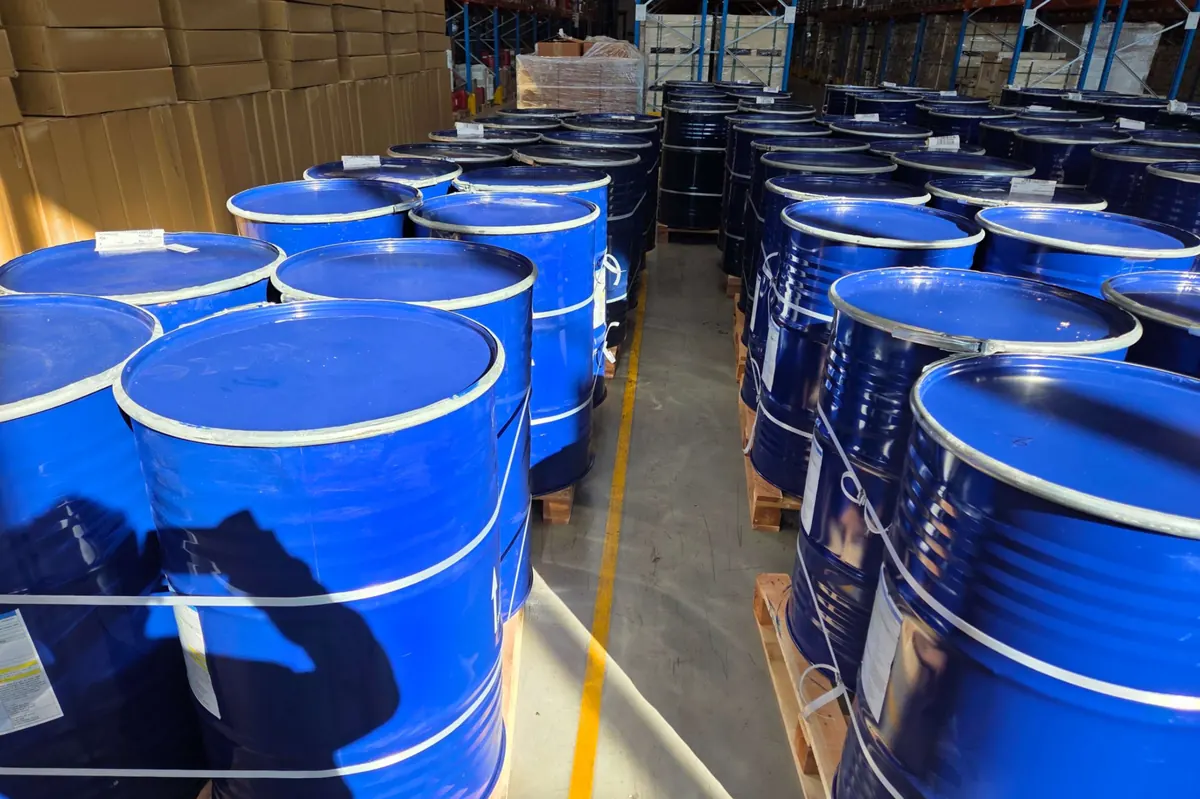
Once your preferred ratio is confirmed and production volumes are predictable, the transition to pallet orders or aseptic drums (200–228 kg) becomes straightforward. MG SALES supplies both formats from stock in Poland.
Frequently asked questions – mango–guava blends
A 70% mango / 30% white guava ratio is the most commonly used starting point for ice cream and gelato. Mango provides the creamy sweetness base while white guava adds an exotic aromatic note. Above 30% guava the aroma becomes dominant, which may suit some formulations but is generally considered too strong for a balanced ice cream profile.
Yes, but the colour and aroma impact will be significantly stronger. Pink guava introduces a visible pink hue to the blend and a more intense tropical aroma. This works well in sorbets and tropical drinks but may be too pronounced for dairy-based ice cream. White guava is recommended for blends where colour neutrality is important.
Yes. White guava pulp has a lower Brix (min 9°Bx) than Alphonso mango (min 16°Bx). A 70/30 mango–guava blend will have a combined Brix of approximately 14–15°Bx, slightly lower than pure mango. This needs to be factored into sugar additions when targeting a specific finished product Brix.
In beverages, a higher guava fraction (up to 50%) works well because the dilution with water balances the aroma. In ice cream and gelato, a lower guava fraction (20–30%) is recommended because the fat and dairy protein amplify aroma compounds, making guava more perceptible at lower concentrations.
Order at least 200 kg of aseptic bag-in-box — for example six 20 kg bags of Alphonso mango pulp and four 20 kg bags of white guava pulp. This gives your R&D team enough material to test multiple blend ratios — 80/20, 70/30, 60/40 — across different applications before committing to larger volumes.
Related pages
- Tropical fruit pulps in 20 kg aseptic bag-in-box – full portfolio overview
- Mango pulp supplier Europe – Alphonso and Totapuri
- How to choose tropical pulp for ice cream, sorbet and gelato
- Tropical pulps in 20 kg aseptic bag-in-box vs aseptic drums (200–228 kg) – what is better for smaller factories?
- Aseptic drum vs bag-in-box for mango pulp – which format to choose?