The core question: format or volume?
Most buyers assume that aseptic drums (200–228 kg) are always more economical and that the only question is when they can justify the volume. In practice, the decision is more nuanced. The right format depends not only on monthly consumption but also on production flexibility, equipment availability, flavour range, and where you are in the product development cycle.
For tropical fruit pulps specifically — where many producers work with multiple flavours simultaneously and recipes are still evolving — the 20 kg aseptic bag-in-box format often remains the better choice well beyond what the cost-per-kg calculation would suggest.
Key differences between 20 kg aseptic bag-in-box and aseptic drums (200–228 kg)
| Factor | 20 kg aseptic bag-in-box | aseptic drum (200–228 kg) |
|---|---|---|
| Net weight | 20 kg per unit | 200–228 kg per unit (215 kg for Alphonso and Totapuri) |
| Handling | Manual, no equipment needed | Requires drum tilter or pump |
| Opening and emptying | Valve tap, gravity or manual | Pump required for full emptying |
| Product waste risk | Very low — small residual | Higher — pump residual in drum |
| Storage footprint | Compact, stackable cartons | Large, requires pallet space and drum handling area |
| Multi-flavour flexibility | Yes — mix flavours on one pallet | No — one SKU per drum |
| Cost per kg | Higher at equivalent volume | Lower at full pallet / container |
| Minimum quantity | 200 kg | Pallet of 4 drums |
| Shelf life (sealed) | Up to 24 months ambient | Up to 24 months ambient |
Custom blending — NFC apple juice with tropical fruit pulps
We blend NFC apple juice with tropical fruit pulps in an aseptic facility in Poland. Small series from 1 pallet. Aseptic bag-in-box or glass bottle. Your label or ours.
- NFC apple + mango (Totapuri) — balanced, golden colour
- NFC apple + guava — mild, versatile base
Which format is right for your operation?
All formats use aseptic technology and provide 24 months of shelf life in the sealed pack. The difference is practical — how much you use per production run and how much waste you can afford.
| Format | Best for | Typical user |
|---|---|---|
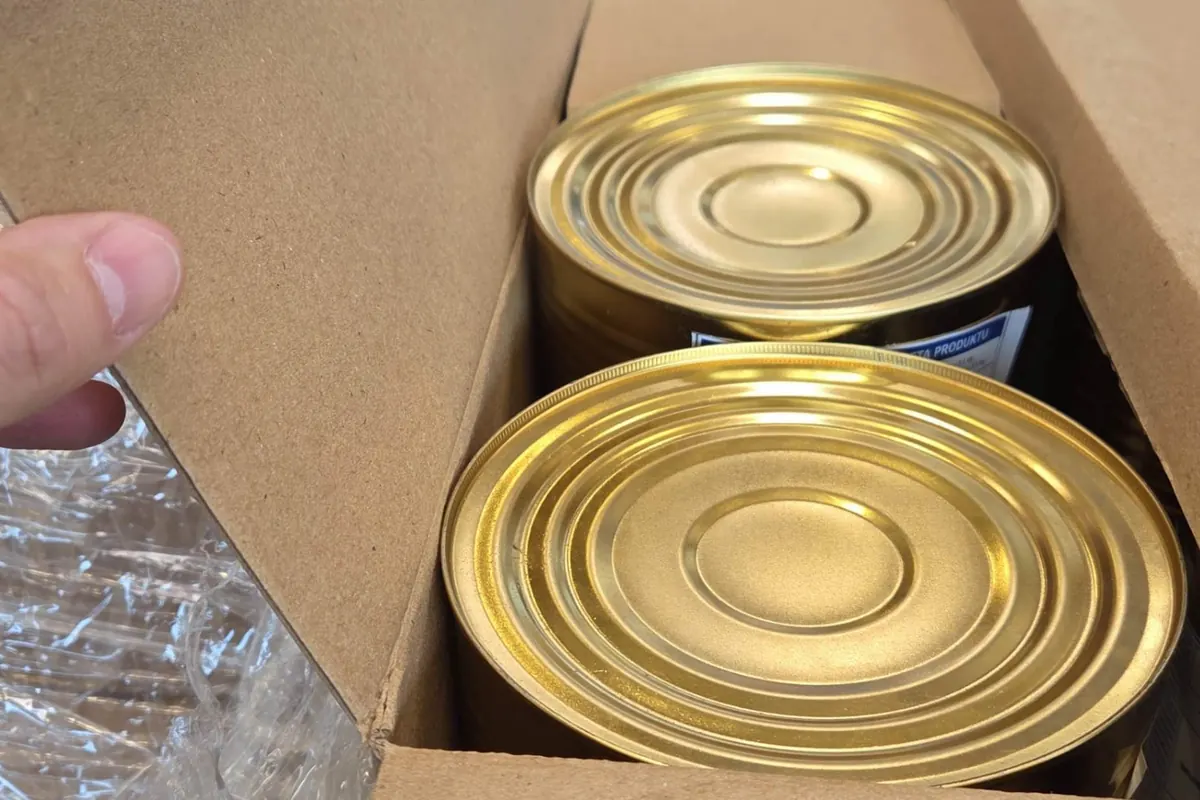
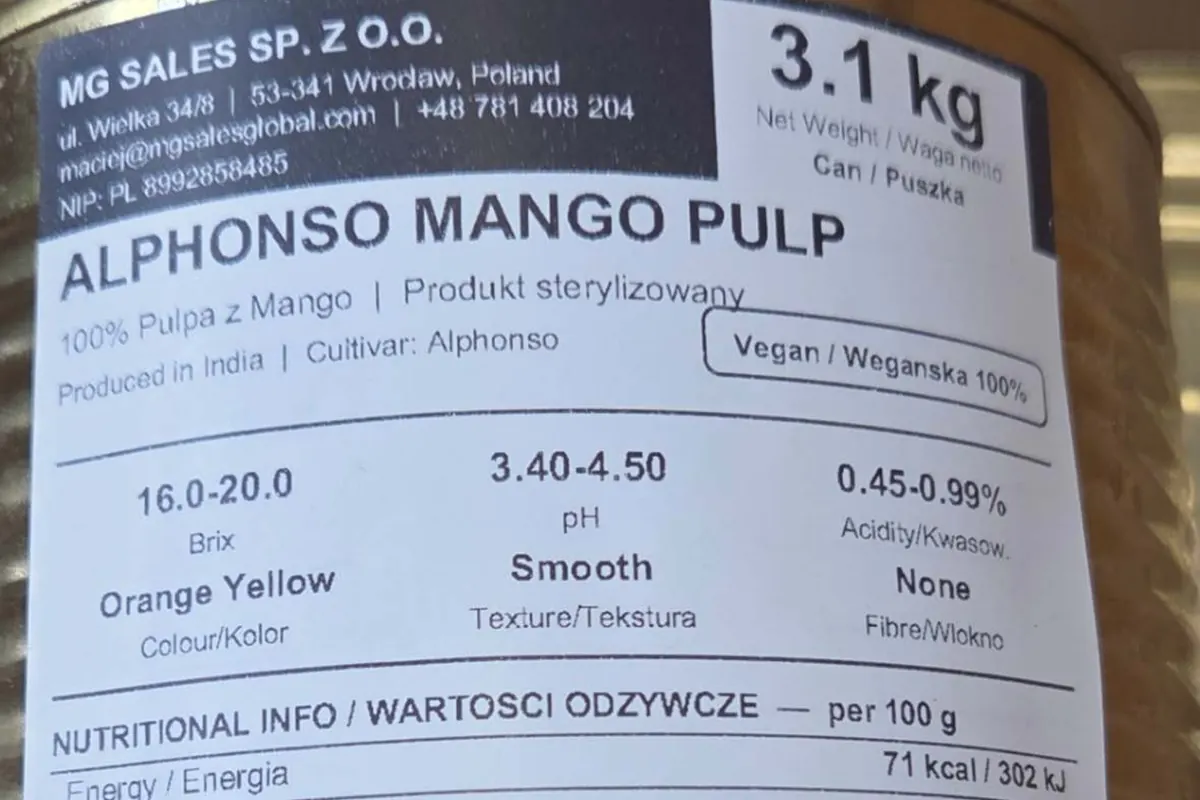
| 3.1 kg can (Alphonso) | Recipe development, single-batch tests, HoReCa and food service | Pastry chef, ice cream lab, café |
| 20 kg bag-in-box | Regular small and mid-scale production, multi-flavour programmes, first orders from 200 kg | Ice cream producer, beverage blender, co-packer |
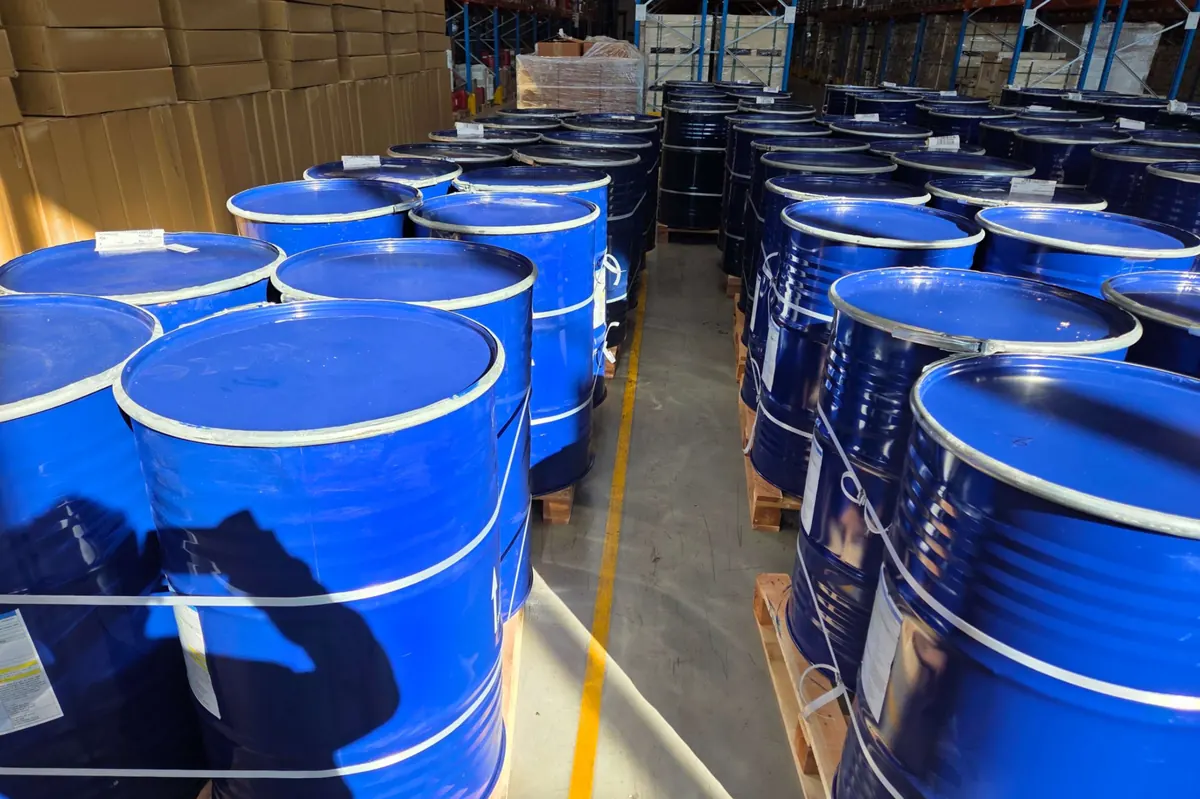
| Aseptic drum (200–228 kg) | High-volume production with pumping equipment, stable recipes | Juice producer, food manufacturer, industrial kitchen |
Mixed pallets across formats and flavours are available — useful when testing several flavours in parallel before committing to a single SKU.
When 20 kg aseptic bag-in-box is the better choice
The 20 kg aseptic bag-in-box format is the right choice when one or more of the following apply:
- R&D and product development — you are testing formulations, comparing flavours or validating recipes. A first order from 200 kg provides enough material for multiple production trials without over-committing.
- Multi-flavour range — you produce ice cream, sorbet or beverages in several tropical flavours but the volume per SKU is relatively small. A mixed pallet of mango, guava, papaya, banana and pineapple is only practical in BIB format.
- Artisan and small-scale production — ice cream labs, craft gelato producers, specialty beverage workshops. Monthly consumption is below 2–3 pallets per flavour and manual handling is standard practice.
- No drum-handling equipment — pumps, drum tilters and heating systems represent a significant capital and operational cost. If this equipment is not already in place, the BIB format avoids both the investment and the complexity.
- Lower waste risk — a 20 kg aseptic bag-in-box is consumed within one or two production runs. An open aseptic drum (200–228 kg) requires careful management to avoid product deterioration between uses.
When aseptic drums (200–228 kg) start to make sense
The transition to drums becomes economically justified when the following conditions are met simultaneously:
- Stable recipes — formulations are confirmed and are not expected to change significantly. Committing to drums means committing to a fixed product specification.
- Predictable volume — consumption is regular and foreseeable, typically more than 2–3 pallets of a single flavour per month. Irregular demand makes drums risky because open drums deteriorate faster than open BIB bags.
- Equipment in place — pumping and drum-handling systems are already operational or the investment is justified by the volume.
- Cost sensitivity at scale — at full pallet or container volumes, the cost-per-kg advantage of drums is meaningful enough to offset the handling complexity.
For most smaller and mid-size factories, drums make sense for one or two core flavours (typically mango) while the rest of the tropical range continues to be supplied in BIB format.
Typical growth path from first orders to industrial programme
Step 1 – First orders from 200 kg and mixed flavour orders
The starting point is an order of at least 200 kg of 20 kg aseptic bag-in-box to test specific flavours. A typical first order for a new tropical range might be two 20 kg bags each of Alphonso mango, white guava, red papaya, banana puree and pineapple pulp. Total: approx. 200 kg across five flavours — enough for meaningful R&D without significant stock risk.
Step 2 – Regular pallets in 20 kg aseptic bag-in-box
Once preferred flavours are identified and production is running, the buyer moves to regular pallet orders — typically one or two flavours in full pallets, with smaller quantities of supporting flavours. Deliveries are scheduled monthly or quarterly. At this stage, the BIB format remains practical for most producers and the multi-flavour flexibility is still valuable.
Step 3 – Drums from stock or direct shipments from India
Aseptic drums (200–228 kg) are available from stock in Wrocław for all varieties and are sold by pallet of 4. At industrial scale — typically when mango or another single flavour exceeds several tonnes per month — direct shipments from India in aseptic drums become economically attractive. A standard 20ft container holds approximately 80 drums (around 17 tonnes of product). MG SALES can organise direct import programmes from India for buyers at this volume level, including pre-shipment QC coordination.
How MG SALES supports both formats
- 20 kg aseptic bag-in-box from stock in Poland — Alphonso and Totapuri mango, white and pink guava, banana, pineapple and red papaya available from the warehouse in Wrocław, plus Alphonso in 3.1 kg cans. Fast dispatch for cartons and pallet orders (minimum order 200 kg).
- Aseptic drums (200–228 kg) from stock — available in Wrocław for all varieties, sold by pallet of 4. For buyers with confirmed larger programmes, drums can also be organised directly from India; lead time is longer than from stock, so discuss your programme with us to plan ahead.
- Mixed FCL from India — for larger buyers who want to combine multiple tropical pulp flavours in a single container shipment. Programme planning and pre-shipment QC included.
Frequently asked questions – BIB vs drums for tropical pulp
Both formats use aseptic inner bag technology and provide up to 24 months shelf life at ambient temperature before opening. The 20 kg aseptic bag-in-box is a smaller outer carton with an aseptic bag inside — easier to handle, ideal for multi-flavour orders and smaller production runs (minimum order 200 kg). The aseptic drum (200–228 kg) is a large industrial format — more economical per kg at scale but requires pumping equipment to empty fully and a larger storage footprint.
BIB format available: 20 kg. Approximately 10–11 bags of 20 kg equal one aseptic drum (200–228 kg). When evaluating cost per kg, the drum format is typically more economical at the same delivery volume, but the bag-in-box format avoids the need for pumping equipment and reduces product waste from incomplete drum emptying.
No. The 20 kg aseptic bag-in-box can be opened with a standard valve and emptied by gravity or manual squeezing. No pumps or drum-handling equipment are required. This is one of the main practical advantages for smaller factories, ice cream labs and artisan producers.
The switch to drums makes sense when you are consuming more than 2–3 pallets of a single flavour per month on a predictable schedule, your production setup has the equipment to handle drums safely, and your recipes are confirmed and stable. Below this threshold, the logistical simplicity and multi-flavour flexibility of the 20 kg aseptic bag-in-box format usually outweigh the cost advantage of drums.
Yes. The 20 kg aseptic bag-in-box format is specifically designed for mixed orders. You can combine mango, guava, papaya, banana and pineapple on a single pallet, which is not practical with aseptic drums (200–228 kg). This makes the BIB format the preferred choice for R&D, product development and producers who maintain a broad tropical flavour range in smaller volumes per SKU.
Related pages
- Tropical fruit pulps in 20 kg aseptic bag-in-box – full portfolio overview
- Mango pulp supplier Europe – Alphonso and Totapuri
- How to choose tropical pulp for ice cream, sorbet and gelato
- Mango–guava blends for ice cream and beverages – ratios that work
- Aseptic drum vs bag-in-box for mango pulp – which format to choose?