Why Most Sourcing Problems Are Preventable
The majority of quality disputes and delivery problems in mango pulp sourcing come from questions that were not asked before the order was placed. A batch with wrong Brix, a supplier who cannot provide a lot-specific COA, a shipment arriving with 4 months remaining shelf life — these are not surprises. They are the result of skipped verification steps.
This checklist covers what to verify before committing to a mango pulp order — regardless of whether you are buying for the first time or reviewing your current supplier.
1. Supplier Verification
Before evaluating the product, evaluate the supplier. A reliable mango pulp supplier should be able to answer the following questions directly and without hesitation:
Supplier checklist
Which processors do you work with in India? A serious supplier names specific processors and regions — not "our trusted partners in India."
Have you visited the processing facilities? Direct factory knowledge matters. Trading through intermediaries adds risk and reduces transparency.
Can you provide a lot-specific COA? Generic product specification sheets are not COAs. The document must reference the specific batch you are buying.
Do you hold physical stock? Suppliers who trade on paper without physical stock cannot guarantee availability, production dates or condition on arrival.
Can you provide references? Existing buyers in your market or product category are the best validation.
A supplier who hesitates on any of these points — or deflects with vague answers — is a risk. Move on or ask again with more precision.
2. Product Specification — Before You Order
Define exactly what you need before contacting any supplier. Vague inquiries produce vague offers. A clear specification protects you and makes comparison between suppliers meaningful.
Product specification checklist
Variety: Alphonso / Totapuri — or a blend?
Minimum Brix: what is the minimum acceptable for your application?
Acidity range: does your formulation require a specific acidity range?
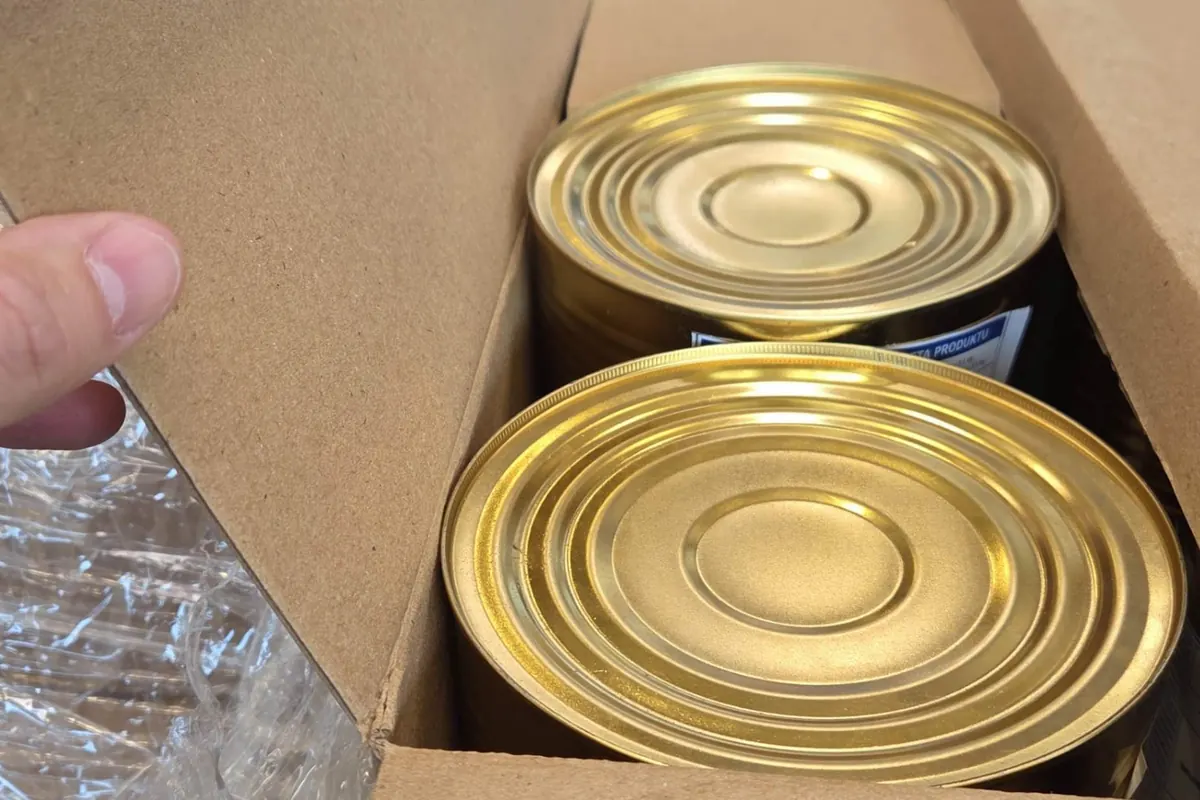
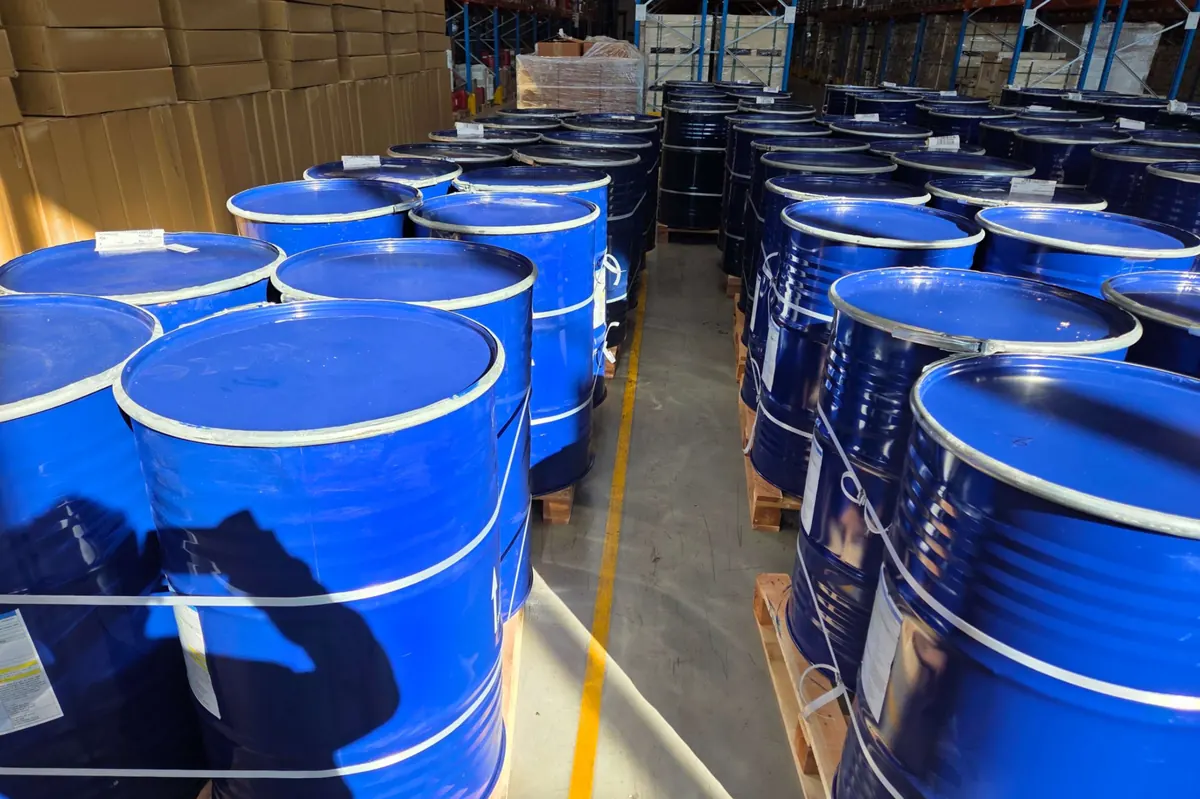
Packaging format: BIB 20 kg / aseptic drum (200–228 kg)?
Natural or with additives: 100% fruit or acceptable with added citric acid / sugar?
Certifications required: organic / FSSC 22000 / BRC / halal / kosher?
Import requirements: any specific documents required by your country's customs or food authority?
3. COA Review — The Most Important Document
The Certificate of Analysis is the single most important document in a mango pulp transaction. It tells you what is actually in the batch — not what the product is supposed to be.
A lot-specific COA must include:
- Batch number and production date — if these are missing, it is not a lot-specific COA
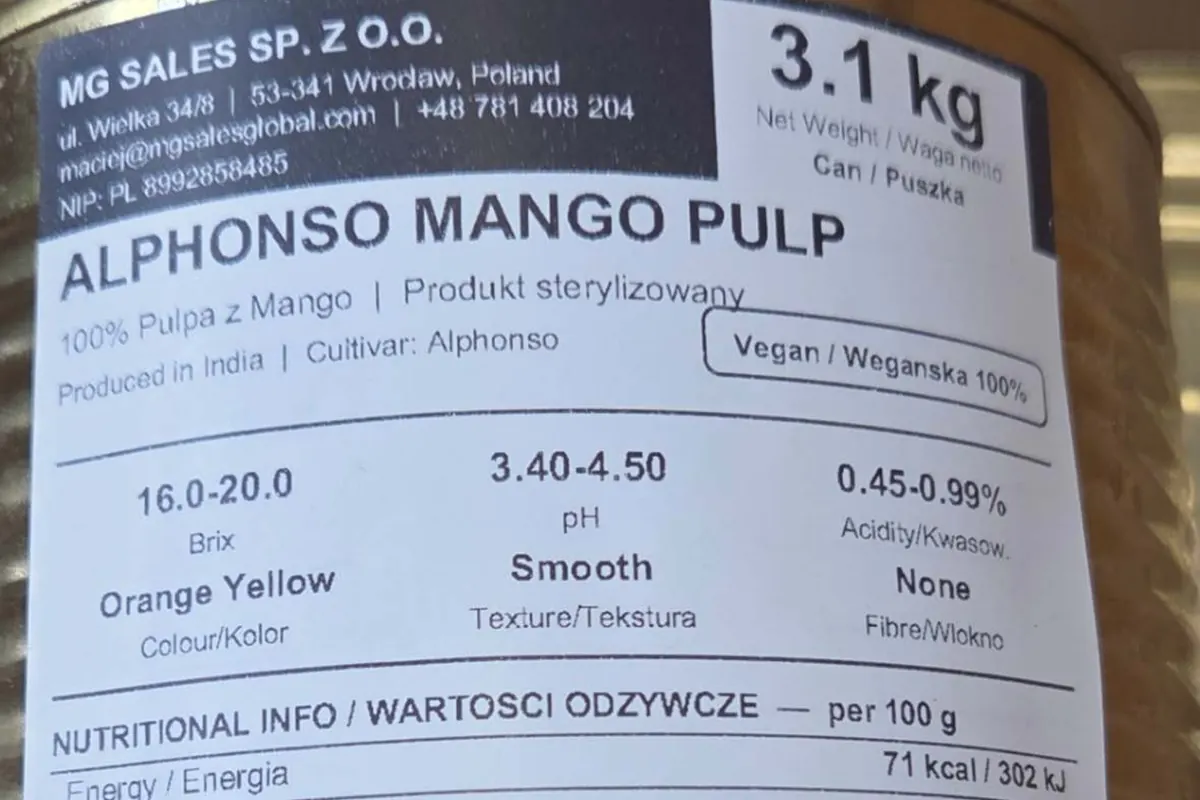
- Brix (°Bx) — measured on this batch, not a specification range
- Acidity (%) — measured on this batch
- pH — for food safety verification
- Color — visual description or measured value
- Total plate count (TPC) — should be below detection limits for aseptic product
- Yeast and mold count — should be below detection limits
- Shelf life / best-before date — calculated from production date
Red flags in a COA
No batch number or production date — this is a generic spec, not a COA.
Brix shown as a range (e.g. "16–20°Bx") instead of a measured value — not lot-specific.
Microbiological results shown as "within limits" without actual numbers — ask for the numbers.
COA issued by the supplier, not the processor or an independent laboratory — verify the issuing party.
4. Shelf Life — What Remains When It Arrives
Aseptic mango pulp has a maximum shelf life of 24 months from the production date. The clock starts at the factory — not at your warehouse.
A batch produced in May 2025 and shipped in November 2025 arrives with approximately 17 months remaining. If you store it for 3 months before use, you have 14 months left. If your product has a 12-month shelf life requirement for your buyers, you are already tight.
Shelf life checklist
Production date: request this before confirming the order — not after.
Remaining shelf life on arrival: calculate based on production date and expected delivery.
Minimum remaining shelf life required: define this in your purchase terms.
MG SALES policy: we do not ship product with less than 12 months remaining shelf life without explicit buyer confirmation.
5. Packaging Inspection on Receipt
Even with a clean COA and a known supplier, packaging can be damaged in transit. Inspect every delivery before accepting it.
- Drums: check for dents, rust, swelling of the inner bag, seal integrity and label accuracy (batch number must match COA)
- Bag-in-box: check cardboard for moisture damage, compression damage or puncture; inspect the bag spout for seal integrity
- Swelling: any swollen inner bag in a drum or swollen bag-in-box indicates microbial activity — do not open, do not use, contact supplier immediately
- Label: confirm that the batch number on the packaging matches the COA you received
6. Sensory Check on First Use
Before committing an entire batch to production, conduct a simple sensory check on the first unit opened. This takes 5 minutes and can prevent a costly production error.
Sensory checklist — on opening
Smell: should be clean, fruity and variety-typical. Any fermented, sour or off-note smell is a reject signal.
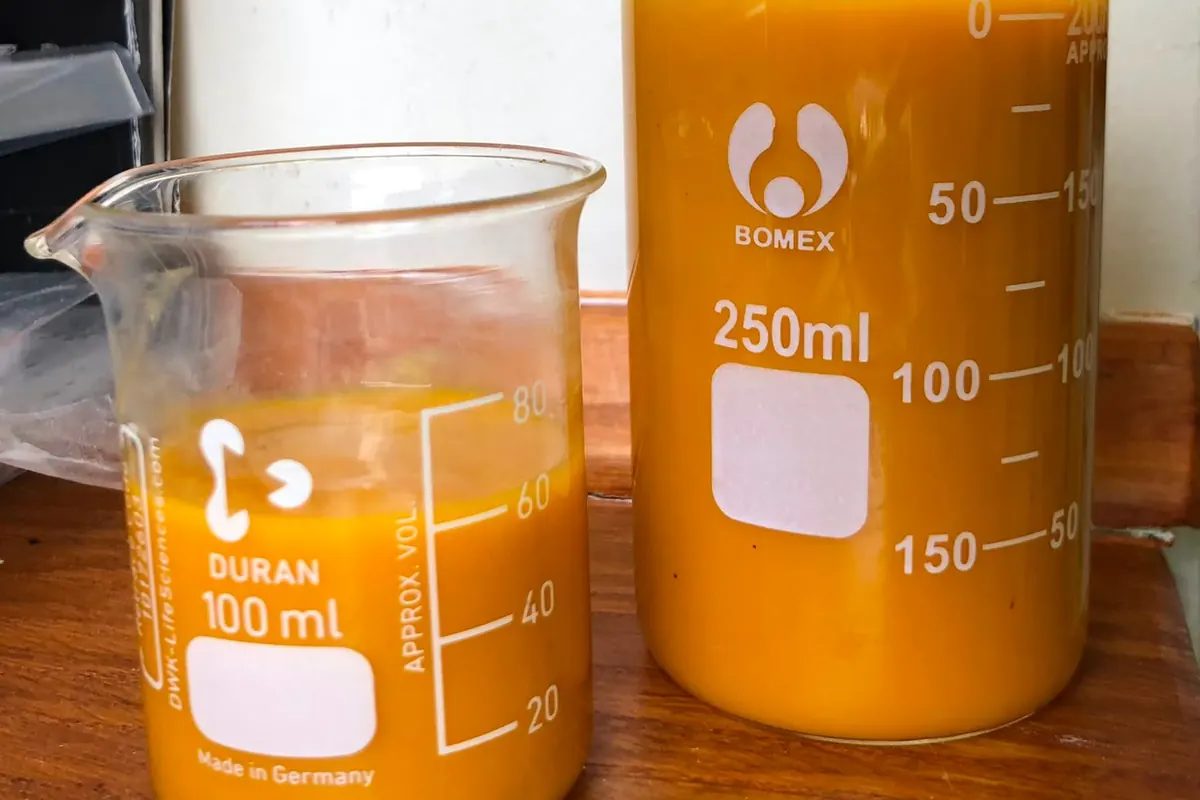
Color: Alphonso should be deep orange. Significant browning or grey tones indicate heat damage or age.
Taste: sweet, clean, characteristic of the variety. Flat, cooked or off-flavors indicate processing or storage problems.
Texture: smooth and consistent. Excessive separation or watery texture in a freshly opened unit may indicate processing issues.
If the sensory check fails, do not use the batch in production. Document what you found (photos, notes) and contact your supplier with the batch number and COA reference.
7. Logistics and Incoterms
Logistics terms define who is responsible for what — and when ownership and risk transfer from supplier to buyer. Clarify these before confirming any order.
- EXW (Ex Works): you collect from the supplier's warehouse. All transport, insurance and import clearance is your responsibility from that point.
- FCA (Free Carrier): supplier delivers to a named point. Risk transfers at that point.
- DAP (Delivered at Place): supplier delivers to your address. You handle import clearance and duty.
- DDP (Delivered Duty Paid): supplier handles everything including import duty. Highest cost but lowest buyer effort.
For buyers in Europe receiving from a Poland-based supplier, DAP is the most common term for pallet deliveries. For full container imports, CFR or CIF is standard depending on insurance arrangement.
8. First Order — Start Small
Regardless of how thorough your pre-order checks are, the first order with any new supplier should be smaller than your target volume. A first order of aseptic bag-in-box (around 200 kg) or a single drum tells you far more about a supplier than any document.
Evaluate the first order on: product quality against COA, packaging condition on arrival, communication during the process, accuracy of documentation, and delivery timing. Only after a successful first order should you scale to regular volume.
First order checklist
Start with a BIB order (around 200 kg) or one drum — not a full pallet or container
Conduct sensory evaluation before approving for production
Compare COA values against your own measurement if you have the equipment
Note communication quality — response time, accuracy, willingness to answer questions
Check documentation completeness — invoice, packing list, COA, all matching
How MG SALES Handles This Process
Everything in this checklist describes how we work on our side before a batch reaches our warehouse. We verify the processor, measure Brix and acidity on the actual lot, review the factory COA and make a go / no-go decision before purchasing.
When you order from us, you receive a lot-specific COA with every shipment. We provide the production date before the order is confirmed. We do not ship product with less than 12 months remaining shelf life without explicit agreement. We answer questions about the batch directly — not through layers of account management.
Frequently Asked Questions
What should I check before buying mango pulp?
Verify the supplier's processor relationship, request a lot-specific COA with Brix, acidity, pH and microbiological results, confirm production date and remaining shelf life, check packaging format and Incoterms, and start with a small test order before scaling.
How do I verify a mango pulp supplier?
Ask which processors they work with in India, whether they have visited the facilities, whether they can provide lot-specific COAs and whether they hold physical stock. A serious supplier answers these questions directly.
What documents should a mango pulp supplier provide?
Lot-specific COA with batch number and production date, commercial invoice, packing list, health or food safety certificate if required, and best-before date.
What is a reasonable minimum order quantity for mango pulp?
From around 200 kg of aseptic bag-in-box for a first test order. One pallet is approximately 40 bags (800 kg net). One aseptic drum is 215 kg. A full container holds approximately 80 drums. BIB available in 20 kg.
How do I avoid buying low-quality mango pulp?
Request a lot-specific COA, verify Brix and acidity match the variety standard, start with a small test order, evaluate sensory quality on receipt and avoid suppliers who cannot name their processors or provide batch documentation.
Related Pages
- Alphonso vs Totapuri – Variety Comparison
- Brix and Acidity in Mango Pulp – What It Means
- Aseptic Drum vs Bag-in-Box – Which Format to Choose
- How Mango Pulp Is Processed in India
- Mango Pulp Shelf Life and Storage Conditions
- Mango Pulp Import from India – How We Work
- Full Mango Pulp & Fruit Purée Offer
- Contact MG SALES